A PDO thread lift is a minimally invasive treatment that uses dissolvable threads to support mildly sagging facial tissue. It can create a subtle lifting effect without traditional facelift surgery. The procedure may also improve facial contours. However, results vary based on your skin, anatomy, treatment area, and the technique used by your provider.
If you are considering a PDO thread lift, professional guidance can help you choose the right approach. At Sadiya Clinic, you can discuss your goals, treatment options, and expected results with a qualified provider. Explore our concierge services for personalized support. Schedule a consultation today and take the next step toward informed, confident treatment planning.
Could You Be a Suitable Candidate for a PDO Thread Lift?
You may be a suitable candidate if you have mild facial sagging and want a subtle lift. A PDO thread lift can suit people seeking a non surgical facelift option. Your skin, facial shape, treatment goals, and expectations also matter. However, a consultation can help confirm whether this treatment suits your needs.
According to a 2026 study in Plastic and Reconstructive Surgery [1], researchers assessed a new PDO thread lifting approach in 83 patients. The findings showed favorable results with few complications. However, individual factors still matter. Your facial structure, skin condition, treatment goals, and expectations can affect suitability. Therefore, a qualified provider should assess you before recommending PDO thread treatment.
Which PDO Thread Lift Benefits May Improve Your Appearance?
PDO thread lift benefits may include subtle lifting, improved facial contours, and temporary tissue support. The treatment can target areas with mild skin laxity. Unlike surgery, it uses small entry points. Your results depend on skin quality, facial structure, thread placement, and provider technique. Therefore, realistic expectations remain important before treatment.
Potential benefits may include:
- Temporary lifting: Threads can support mildly sagging facial tissue.
- Improved contours: Treatment may enhance definition around selected facial areas.
- Targeted correction: Providers can focus on areas needing subtle improvement.
- Minimal incisions: The procedure uses small entry points instead of large surgical cuts.
- Collagen response: PDO material may encourage changes in surrounding tissue.
- Limited downtime: Recovery is generally shorter than traditional facelift surgery.
A PDO thread lift can provide subtle facial rejuvenation without traditional facelift surgery. Results vary between individuals. Your skin condition, facial structure, and treatment area can affect the outcome. Moreover, threads cannot provide the same correction as surgery. A qualified provider can assess your features and recommend an approach that matches your goals.
What Should You Expect During PDO Thread Lift Recovery?
PDO thread lift recovery may involve swelling, bruising, tenderness, and mild tightness. These effects usually improve as your skin heals. You may notice some lifting soon after treatment. However, swelling can affect the early appearance. Follow your provider’s aftercare advice carefully. Avoid pressure, strenuous activity, and unnecessary facial movements during the early healing period.
According to a 2024 systematic review in Dermatologic Surgery [2], researchers examined PDO thread lift outcomes and safety. The review found early improvements after treatment. However, patients also reported effects such as swelling, bruising, and discomfort. These issues were generally temporary. Therefore, following aftercare guidance remains important during healing. Individual recovery can still vary between patients.
How Long Does a PDO Thread Lift Last, and What Results Can You Expect?
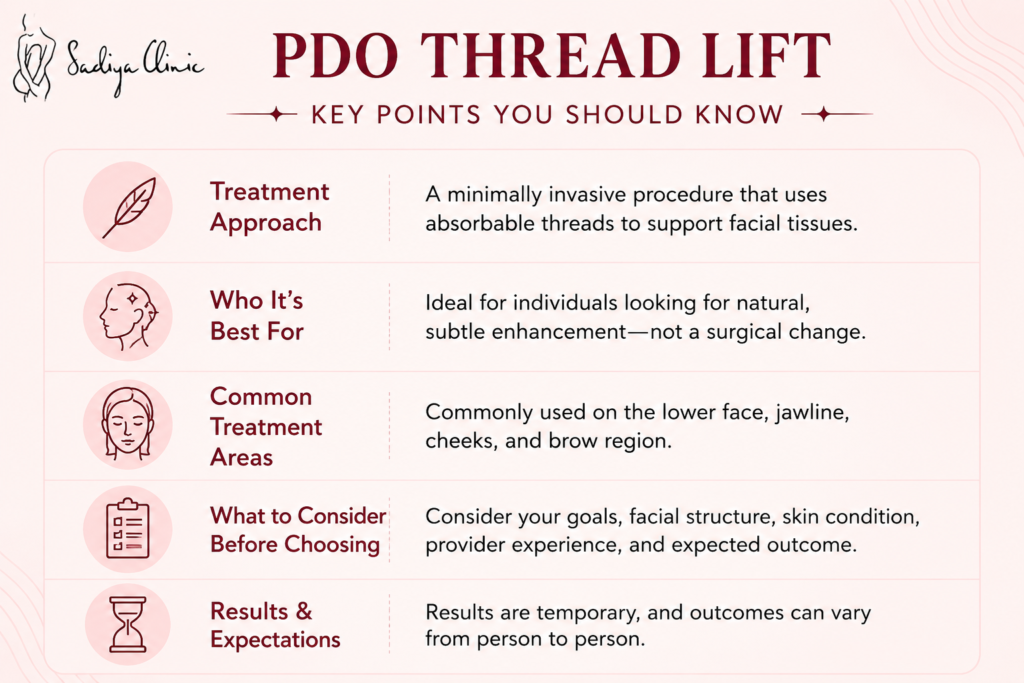
PDO thread lift results are temporary, and their duration varies between individuals. You may notice lifting soon after treatment. Swelling can change the early appearance. Skin quality, thread type, treatment area, facial structure, and technique also affect results. Your provider can explain the expected timeline and changes during recovery.
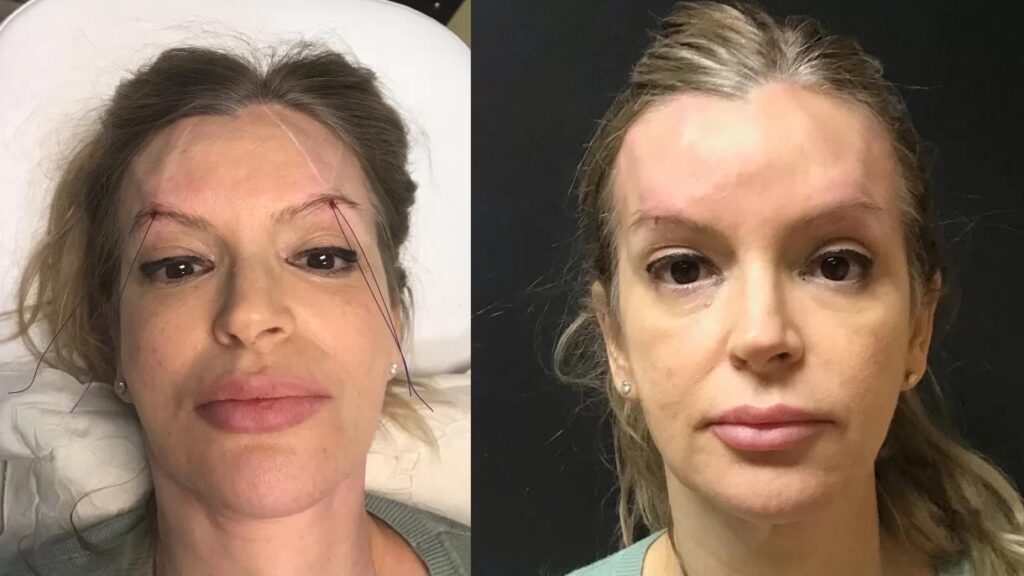
PDO Threads Before and After
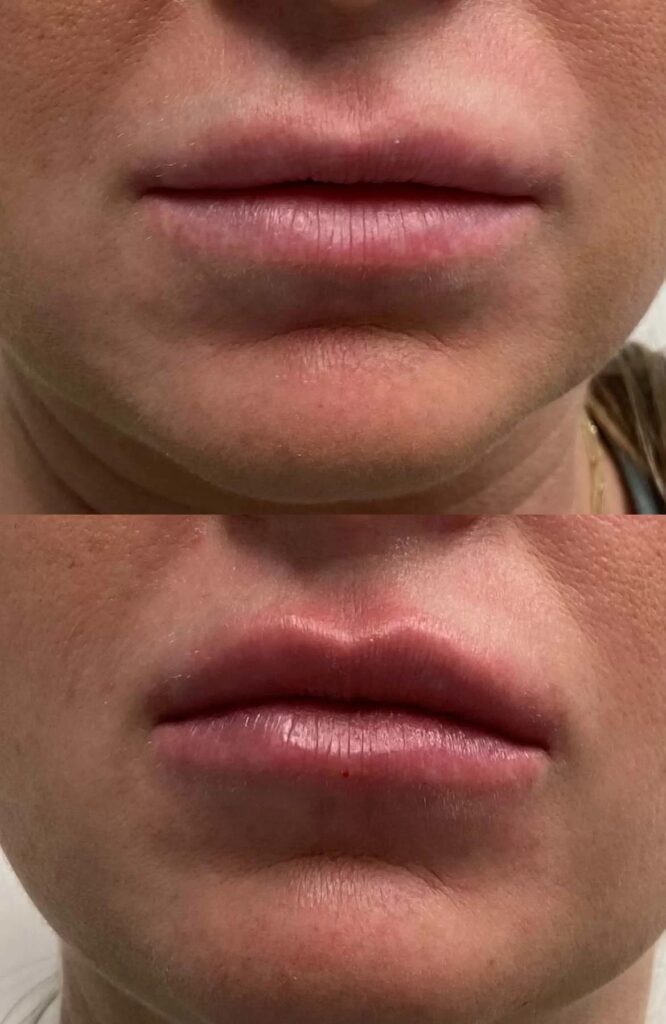
Before-and-after photos can show changes in facial contour and lifting. However, lighting, facial expression, camera angle, and swelling can affect comparisons. Choose images taken under similar conditions for a more useful comparison.
PDO Thread Lift for Jawline
A PDO thread lift for jawline treatment may provide temporary support around the lower face. It can improve definition when mild laxity affects the contour. Results depend on anatomy, skin quality, thread placement, and technique.
PDO Thread Lift for Brow Lift
A PDO thread lift for brow lift treatment can provide subtle elevation around selected areas. Your natural brow position, skin laxity, facial structure, and thread placement can influence the final appearance and symmetry over time.
According to a 2025 study in Aesthetic Surgery Journal Open Forum [3], researchers examined PDO thread lifting over 60 days. Patients showed changes in facial volume and tissue position. However, these effects became smaller during follow-up. Adding more threads did not improve outcomes significantly. Therefore, results may change with time. Realistic expectations remain important before treatment.
Explore Your PDO Thread Lift Options at Sadiya Clinic
You may want a fresher, more defined appearance but feel unsure about which treatment suits you. You may also worry about recovery, discomfort, risks, or unrealistic results. Searching for reliable information can make the decision harder. You deserve clear guidance that helps you understand your options before choosing a cosmetic treatment.
At Sadiya Clinic, you can discuss your concerns and facial goals with a qualified provider. Learn about the procedure, recovery, and expected results. You can also explore suitable treatment areas. Contact us today to discuss your options, or email sadiya@sadiyaclinic.com for personalized guidance before your treatment.
FAQs
Are PDO thread lifts painful?
PDO thread lifts may cause mild discomfort, pressure, or pulling during treatment. Your provider usually uses local anesthesia to improve comfort. Some tenderness can remain afterward. However, pain levels vary between individuals and treatment areas. Following your provider’s aftercare instructions can also help keep discomfort manageable during the early recovery period.
What are the risks of a PDO thread lift?
PDO thread lifts can cause swelling, bruising, tenderness, or temporary unevenness. Less common problems include infection, dimpling, thread visibility, or asymmetry. These effects can vary between individuals. Choosing an experienced provider may reduce certain risks. Contact your provider promptly if you notice severe pain, worsening swelling, or unusual skin changes.
Can you sleep normally after a PDO thread lift?
You may need to adjust your sleeping position temporarily after a PDO thread lift. Sleep on your back with your head slightly elevated. Avoid pressing your face against the pillow. This can reduce pressure on treated areas. Follow your provider’s specific instructions, as recovery needs can vary between individuals.
What should you avoid after a PDO thread lift?
After a PDO thread lift, avoid strenuous exercise, facial massage, and pressure on treated areas. Also, limit excessive facial movements during early healing. Avoid sleeping directly on the treated area also. Follow your provider’s aftercare instructions carefully. These steps can support healing and reduce unnecessary irritation during recovery.
Can PDO threads be removed if you are unhappy with the results?
Yes, a clinician can sometimes remove PDO threads if you are unhappy with the result. However, complete removal may not always be possible because the material gradually dissolves. Early assessment can help determine the best option. Your provider may recommend observation, adjustment, or removal based on your specific concerns.
References
- Yu, A. Y., & Pu, L. L. Q. (2026). Polydioxanone (PDO) thread lift for face: A novel anatomical approach. Plastic and Reconstructive Surgery.
- Riopelle, A. M., Geisler, A. N., Eber, A., & Dover, J. S. (2025). Update on absorbable facial thread lifts. Dermatologic Surgery, 51(5), 509–514.
- Germani, M. M., Teixeira, A. B., & Diniz, D. A. (2025). Polydioxanone threads in facial tissue: A randomized clinical trial. Aesthetic Surgery Journal Open Forum.