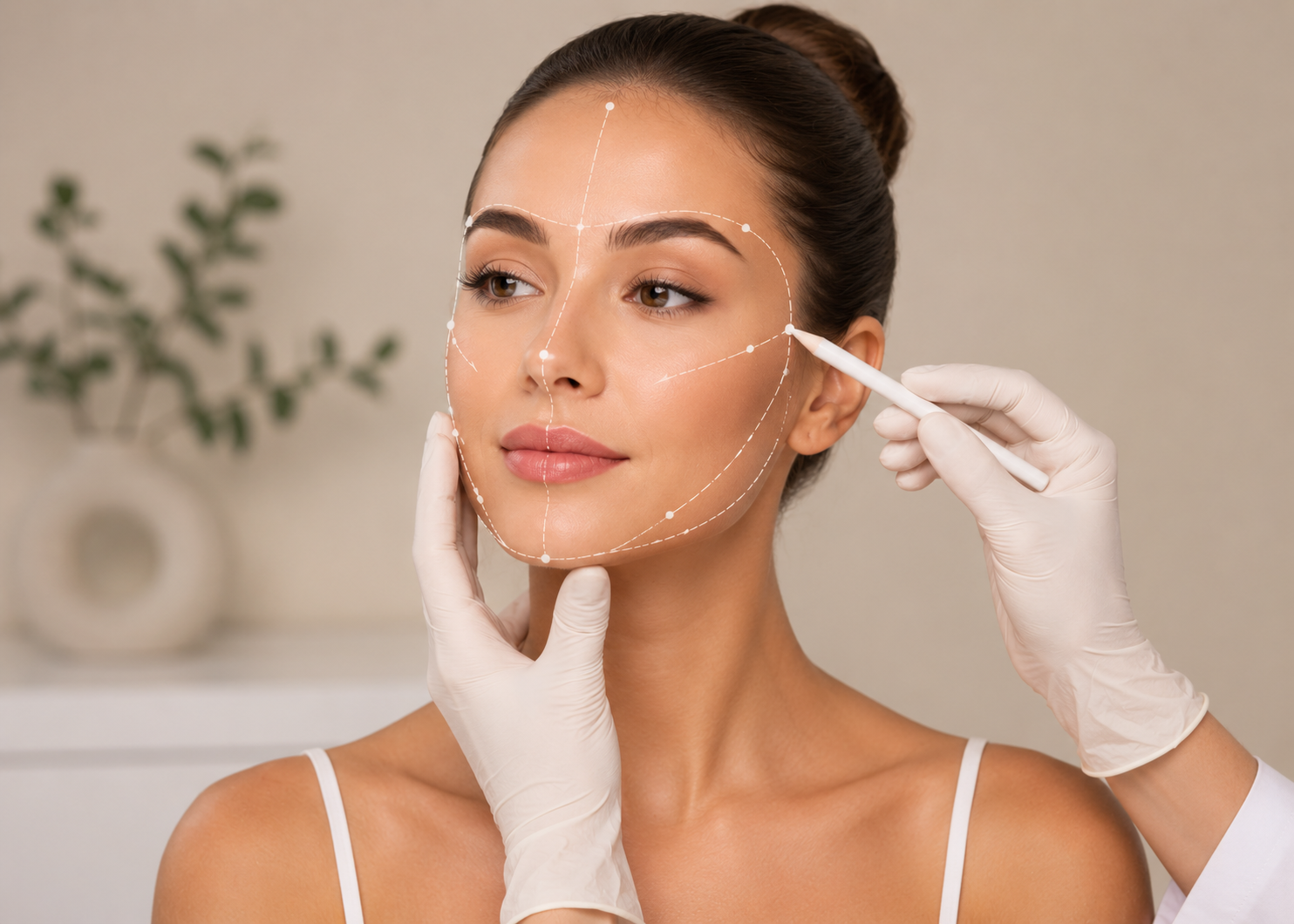
Facial balancing can improve the proportion and harmony of your appearance through care planned around your needs. Treatment may involve one or more areas, depending on the changes you want to achieve. Before making a decision, it helps to learn about available options, expected results, recovery time, possible side effects, and how long the effects may last.
If you want subtle improvements while still looking like yourself, careful planning matters. At Sadiya Clinic, your consultation focuses on what you would like to change and the options that may suit you. Schedule a consultation today to receive clear guidance and explore an approach designed to complement your natural appearance.
What Is Facial Balancing and How Does It Create Facial Harmony?
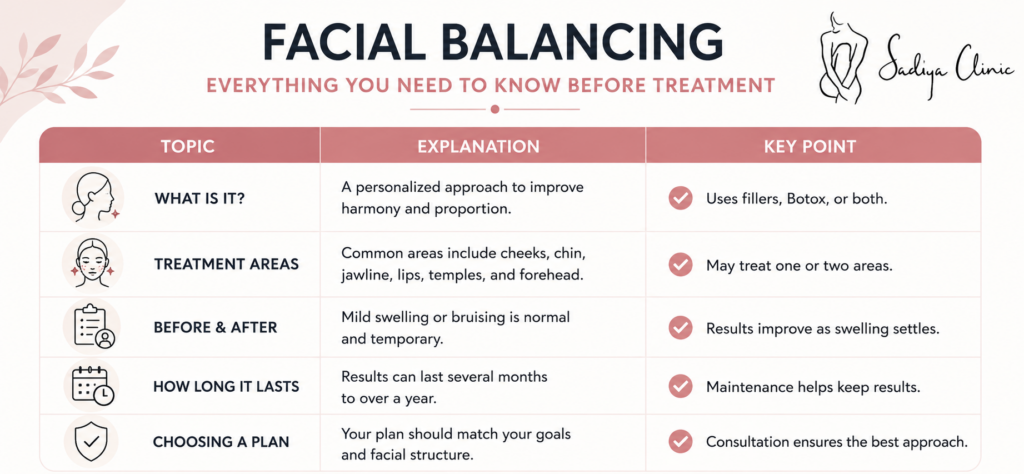
Facial balancing is a cosmetic approach that helps create better proportion between your features. Rather than changing one area without considering the rest of your face, it looks at how each part relates to the others. Depending on your needs, care may include fillers, Botox, or both to make subtle changes while keeping your appearance natural.
According to a 2025 clinical study available through the National Library of Medicine [1], treating the chin, smile lines, and lines around the mouth with hyaluronic acid fillers improved facial harmony and appearance. Patients also reported high satisfaction after treatment. The findings suggest that addressing related areas through a planned approach may support a more harmonious result.
Which Areas of the Face Can Be Treated for Better Balance?
Several parts of the face can be addressed to create better proportion between your features. Common areas include the cheeks, chin, jawline, lips, and temples. However, you may only need changes in one or two places. Your provider can examine how these areas relate to each other and suggest options that complement your natural appearance.
Depending on your needs, the following areas may be considered as part of your treatment:
- Cheeks: Adding support or gentle contour can improve midface shape and create a smoother transition between nearby features.
- Chin: Treatment can improve chin shape or projection, helping it sit in better proportion with the nose, lips, and jawline.
- Jawline: Careful treatment can add definition to the lower face and create a clearer transition between the jaw and neck.
- Lips: Subtle adjustments can improve shape, volume, or proportion while keeping the lips in harmony with surrounding features.
- Temples: Restoring lost volume in this area can soften hollowing and create a smoother transition from the forehead to the cheeks.
The best approach depends on your anatomy, priorities, and desired outcome. You do not need to address every part of your face to see a noticeable difference. Often, careful changes in selected places can improve proportion without adding unnecessary volume. A detailed consultation can help identify where treatment may offer the most value.
What Should You Expect From Facial Balancing Before and After Treatment?
Before facial balancing, you will have a consultation to discuss your goals, health history, and any cosmetic procedures you have had in the past. Your provider will examine your features and explain the options that may suit you. After the procedure, you may notice mild swelling, redness, soreness, or bruising. These effects are usually temporary and improve with time.
When comparing facial balancing before and after results, remember that changes need time to settle. You may see an early difference soon after your appointment, while the final outcome can take longer to appear. Since everyone responds differently, follow the aftercare instructions you receive and attend recommended follow-up visits to review your progress and ask questions.
How Long Does Facial Balancing Last?
How long facial balancing lasts depends on the procedures included in your plan. Some effects may remain visible for several months, while others can last a year or longer. The timeline varies based on the product used, the area treated, facial movement, and how your body responds. As a result, maintenance needs are different for each person.
According to a 2025 study available on ScienceDirect [2], hyaluronic acid fillers used in the midface, chin, and jawline showed improvements through a 12-month follow-up period. Since fillers can be one part of a facial balancing approach, the research provides useful information about their duration. However, results may differ based on the procedure and individual response.
How Can You Choose the Right Facial Balancing Treatment Plan?
Choosing a suitable facial balancing plan starts with understanding what you want to improve and why. Your provider should consider your needs before suggesting any procedure. Rather than choosing a treatment because it is popular, focus on changes that fit your appearance and preferences. A thoughtful plan should also explain the purpose of each option and set clear, practical expectations.
Share the Changes You Want to See
Explain what you would like to improve in simple terms. This gives your provider a clearer idea of your priorities and helps keep the discussion focused on changes that matter to you.
Understand the Reason for Each Option
Ask why a certain procedure or area has been suggested. A clear explanation can help you understand its purpose, possible outcome, and whether another option may be worth considering.
Learn About Side Effects and Aftercare
Before making a decision, ask about possible side effects and care instructions. Knowing these details in advance can help you prepare properly and manage the first few days more comfortably.
Choose Results That Suit Your Features
Photos can help you explain your preferences, but they should not become an exact target. Each person has unique features, so the final approach should complement your own appearance.
According to a 2024 expert article published by Dove Medical Press [3], good facial aesthetic care should include proper screening, assessment, aftercare, and follow-up. The experts also highlight the importance of understanding patient goals and discussing concerns before a procedure. Clear communication can help you understand your options and make informed decisions about your care.
Start Your Facial Balancing Consultation at Sadiya Clinic
You may feel that certain features look out of proportion, but you may not know which option is right for you. Choosing between fillers, Botox, and other procedures can feel confusing. You may also worry about looking overdone or making changes that do not suit your appearance. These concerns can make it harder to decide where to begin.
At Sadiya Clinic, your consultation starts with a clear discussion about what you would like to improve. Your provider can assess your facial proportions and explain suitable options in simple terms. Together, you can choose an approach that complements your features and preferences. Contact us today to schedule your consultation and explore the options available to you.
FAQs
Is facial balancing painful?
Facial balancing may cause mild discomfort, but the experience varies from person to person. You may feel a small pinch or pressure during injectable treatments. Providers may use numbing cream or other comfort measures when suitable. Any tenderness after treatment is usually temporary and depends on the areas treated.
How much downtime should I expect after facial balancing?
Downtime after facial balancing is usually short, but it depends on the treatments you receive. You may notice mild swelling, redness, tenderness, or bruising after injectable procedures. These effects often improve gradually. Your provider will explain what to expect and give you aftercare instructions based on your specific treatment plan.
Can facial balancing look natural and subtle?
Yes, facial balancing can create subtle results when the approach suits your features and goals. The aim is to improve harmony rather than change how you look. Careful adjustments to selected areas can improve proportion while keeping your expressions and individual characteristics. The final outcome depends on the procedures included and how your body responds.
Is there a right age to consider facial balancing?
There is no perfect age for facial balancing. The right time depends on your facial features, concerns, and personal goals. Some people want to improve facial balance, while others notice changes as they get older. A consultation can help you understand whether the treatment is suitable for you and your desired results.
Can facial balancing be done in one appointment?
Yes, facial balancing can sometimes be completed in one appointment, depending on your goals and recommended procedures. However, some people may benefit from a gradual approach over several visits. This allows the provider to review changes carefully, make minor adjustments when needed, and avoid doing more than necessary during a single appointment.