— VIENNA, VA • MINUTES FROM TYSONS CORNER

Specialists in Medical Aesthetics and Hormone Optimization in Northern Virginia

Botox, dermal fillers, PDO thread lifts, laser skin renewal and PRP hair restoration delivered by Dr. Sadiya Naseem, DNP, FNP-BC, a national trainer of injectors across the country.

Tag: Aesthetician

Kybella for Double Chin: Cost, Results & What to Expect

Kybella treatment for double chin

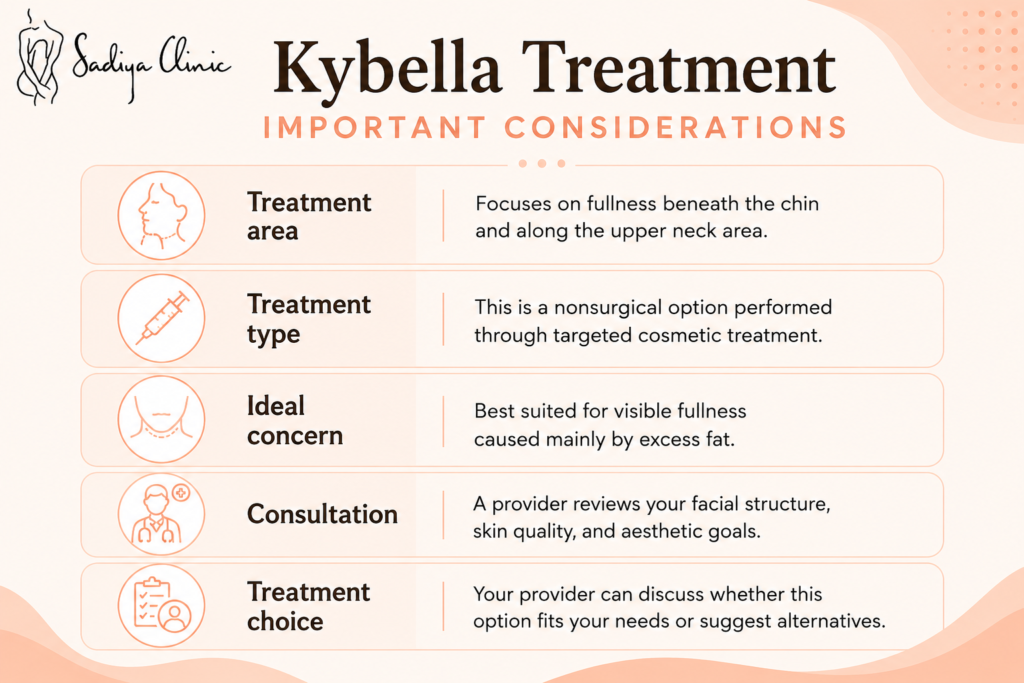
Kybella is a nonsurgical treatment that can reduce stubborn fat beneath your chin and improve facial definition. It uses deoxycholic acid to target fat cells in the treated area. Results develop gradually after each session. However, your outcome depends on fat volume, skin elasticity, facial structure, and treatment goals. A professional assessment can help determine whether this treatment suits your individual needs.

If you are exploring ways to reduce fullness beneath your chin, expert guidance can help you understand your options. At Sadiya Clinic, you can discuss your aesthetic goals and learn what may suit your facial structure. Explore our concierge services for personalized support. Schedule a consultation today and move forward with greater clarity.

How Does Kybella Work on Submental Fat?

Kybella reduces submental fat by destroying targeted fat cells beneath the chin. It contains deoxycholic acid, which disrupts adipocyte membranes after injection. The body then gradually removes the damaged cells. Therefore, treated areas become less full over time. This process can create a slimmer contour beneath the chin without surgery or traditional liposuction procedures.

A 2016 study in Dermatologic Surgery [1] evaluated ATX-101 for moderate-to-severe submental fat. Researchers compared treated participants with those receiving placebo. The treatment group showed greater improvement in chin fullness. Patients also reported better satisfaction with their facial appearance. Therefore, the findings support deoxycholic acid for targeted fat reduction beneath the chin.

What Factors Affect Kybella Treatment Cost?

The factors that affect Kybella treatment cost include vial quantity, treatment sessions, provider experience, clinic location, and submental fat volume. Your treatment goals can also influence the final price. Each person needs a different plan. Therefore, costs can vary. A consultation helps estimate your expected expense based on your needs and desired outcome.

These factors can influence your treatment cost:

  • Number of vials: Your provider decides how much product you need.
  • Treatment sessions: Multiple visits can increase the total expense.
  • Submental fat volume: Larger areas may require more product.
  • Provider experience: Expertise and qualifications can affect treatment fees.
  • Clinic location: Prices can vary between different regions.
  • Treatment goals: Your desired contour can influence the treatment plan.

Your total expense depends on your personalized treatment plan. There is no single price for everyone. Ask about product quantity and session requirements beforehand. Also, confirm consultation and follow-up charges. This gives you a clearer estimate. It helps you compare providers based on complete service, not price alone. Then, you can plan your budget with greater confidence.

When Will You See Changes After Kybella Injections?

You may start seeing changes within a few weeks after treatment. However, swelling can temporarily hide early improvement. As your body clears treated fat cells, the chin gradually looks slimmer. Results become more noticeable after each session. Your final appearance may take several weeks to develop. Individual responses can vary based on fat volume and treatment area.

A 2014 study in the Journal of the European Academy of Dermatology and Venereology [2], examined deoxycholic acid for excess chin fullness. Participants received sessions at four-week intervals. Researchers assessed their progress after the final visit. The findings showed meaningful improvement compared with placebo. Therefore, visible changes developed gradually, supporting realistic expectations about treatment timing and follow-up.
Kybella Treatment Important Considerations

How Many Sessions Do You Need and What Is Recovery Like?

You may need up to six treatment sessions, with at least one month between visits. Many patients notice improvement after two to four sessions. However, your plan depends on fat volume, facial structure, and desired contour. Recovery may include temporary swelling, bruising, tenderness, numbness, or firmness around the treated area.

Number of Treatment Sessions

Your provider determines the required visits after assessing your chin area. Some patients need fewer sessions. Others may require additional visits. Treatment spacing allows the area to settle before the next appointment begins.

Swelling During Recovery

Swelling commonly develops after treatment and gradually improves. Clinical data reports a median duration of 11 days. However, your recovery may differ based on treatment intensity, individual response, and the number of sessions completed.

Common Recovery Effects

Temporary bruising, tenderness, numbness, redness, and firmness can occur after treatment. These effects usually affect the treated area. Their severity varies between individuals. Follow your provider’s aftercare instructions carefully during recovery.

A 2016 review in The Annals of Pharmacotherapy [3], examined deoxycholic acid for reducing fullness beneath the chin. Researchers reviewed clinical evidence on treatment use, effectiveness, and safety. Common reactions included swelling, bruising, pain, numbness, and firmness. These effects were usually temporary and localized. The findings support its use for suitable adults seeking nonsurgical contouring options.

Schedule Your Kybella Consultation Today with Sadiya Clinic 

You may feel frustrated by stubborn fullness beneath your chin that does not improve with diet or exercise. It can change your profile and affect your confidence in photos. You may also feel uncertain about treatment costs, expected results, recovery time, or whether this option suits your needs. These concerns can make choosing the right approach more challenging and leave you unsure about your next step.

At Sadiya Clinic, you can discuss your concerns during a personalized consultation with a qualified provider. Your provider can assess your submental fat, skin quality, and facial structure. You can also learn about suitable options, expected results, recovery, potential side effects, and costs before deciding. Contact us today to explore your options. Reach Sadiya Clinic at sadiya@sadiyaclinic.com and take the first step toward your treatment goals.

FAQs

Does Kybella hurt during treatment?

You may feel brief stinging, burning, or pressure during treatment. Most people tolerate the discomfort well. Mild tenderness can continue afterward. Your provider may use comfort measures to make the procedure easier. Pain levels vary based on individual sensitivity and the treated area.

Who is not a good candidate for Kybella?

People with significant loose skin may not be ideal candidates for this treatment. Those with limited submental fat may also see little benefit. An infection near the treatment area can delay treatment. Your provider will review your health, skin quality, and treatment goals before proceeding.

Can it improve loose skin under the chin?

It may improve the appearance of loose skin slightly, but it does not directly tighten skin. Its main purpose is to reduce excess fat beneath the chin. If significant skin laxity remains, your provider may suggest another treatment. Results depend on your skin elasticity, facial structure, and fat distribution before recommending the most suitable approach.

Will it make your jawline look more defined?

Yes, it can make your jawline look more defined by reducing excess fat beneath the chin. As the treated area becomes slimmer, the natural contour between your chin and neck may appear clearer. However, results vary based on your facial structure, skin elasticity, and amount of submental fat.

When can you return to exercise after Kybella?

You can usually return to light exercise after a few days, once swelling and discomfort begin to improve. However, avoid strenuous activity during early recovery. This helps reduce irritation and excess swelling. Follow your provider’s instructions, especially if tenderness or bruising continues. Gradually resume your normal routine as the area settles.

References

  1. Jones, D. H., Carruthers, J. D., Joseph, J. H., Callender, V. D., Walker, P. S., Lee, D. R., & … (2016). ATX-101 (deoxycholic acid) for reduction of moderate or severe submental fat: A phase 3 randomized, double-blind, placebo-controlled study. Dermatologic Surgery, 42(1), 38–49.
  2. Ascher, B., Hoffmann, K., Walker, P., Lippert, S., Wollina, U., & Havlickova, B. (2014). Efficacy, patient-reported outcomes and safety profile of ATX-101 (deoxycholic acid), an injectable drug for the reduction of unwanted submental fat: Results from a phase III, randomized, placebo-controlled study. Journal of the European Academy of Dermatology and Venereology, 28(12), 1707–1715.
  3. Dunican, K. C., & Patel, D. K. (2016). Deoxycholic acid (ATX-101) for reduction of submental fat. The Annals of Pharmacotherapy, 50(10), 855–861.
Aesthetician, Kybella

Melasma treatment

Melasma is a common skin condition that causes brown or grayish patches, often across the face. Sun exposure, hormonal changes, genetics, and visible light can contribute. Effective care usually combines daily protection with suitable topical products or professional procedures. However, results vary by skin type, severity, triggers, and treatment history. Consistency also plays an important role.

Melasma can feel frustrating when dark patches remain despite regular skincare. At Sadiya Clinic, you receive personal guidance based on your skin needs. Our concierge services make your care simple and convenient. You can discuss your concerns and learn about suitable choices. Schedule a consultation today to take the next step toward healthier-looking, more even skin.

What Causes Melasma on the Face?

Melasma causes include sunlight, hormonal changes, genetics, and visible light exposure. These factors can increase pigment production in your skin. Pregnancy and hormonal medicines may also play a role. Your skin type can affect your risk as well. Often, several triggers work together rather than causing pigmentation alone. Therefore, identifying personal triggers can support better management.

A 2024 study in the Journal of the American Academy of Dermatology [1], examined factors linked with melasma. Researchers assessed hormonal and reproductive influences among affected patients. The findings add evidence that melasma has several contributing factors. Therefore, personal history may help explain why pigmentation develops or persists. This supports a broader approach when assessing individual cases.

Which Melasma Treatment Options Can Help Fade Dark Patches?

Melasma treatment options such as prescription creams, azelaic acid, chemical peels, and laser procedures can help fade dark patches. The right choice depends on your skin type, pigmentation level, and previous skincare. Therefore, a professional assessment can guide your care. Most plans also include daily sun protection. This helps prevent further darkening and supports gradual improvement.

Common options include:

  • Prescription creams: Hydroquinone, tretinoin, and combination formulas can help reduce excess pigment.
  • Azelaic acid: This ingredient may improve uneven color while supporting gentle skincare.
  • Chemical peels: Professional peels can reduce surface pigment and refresh the skin.
  • Laser treatments: Selected procedures may help stubborn discoloration when carefully planned.
  • Sun protection: Daily broad-spectrum sunscreen helps prevent further darkening and supports progress.

Each approach works differently, so your skin needs careful assessment before treatment. Some methods may suit mild pigmentation, while others suit persistent cases. Moreover, professional supervision can lower irritation risks. A suitable routine can support gradual improvement and maintain clearer-looking skin. Consistency also remains important throughout your care journey, especially when managing recurring discoloration.

How Long Does Melasma Treatment Take to Show Results?

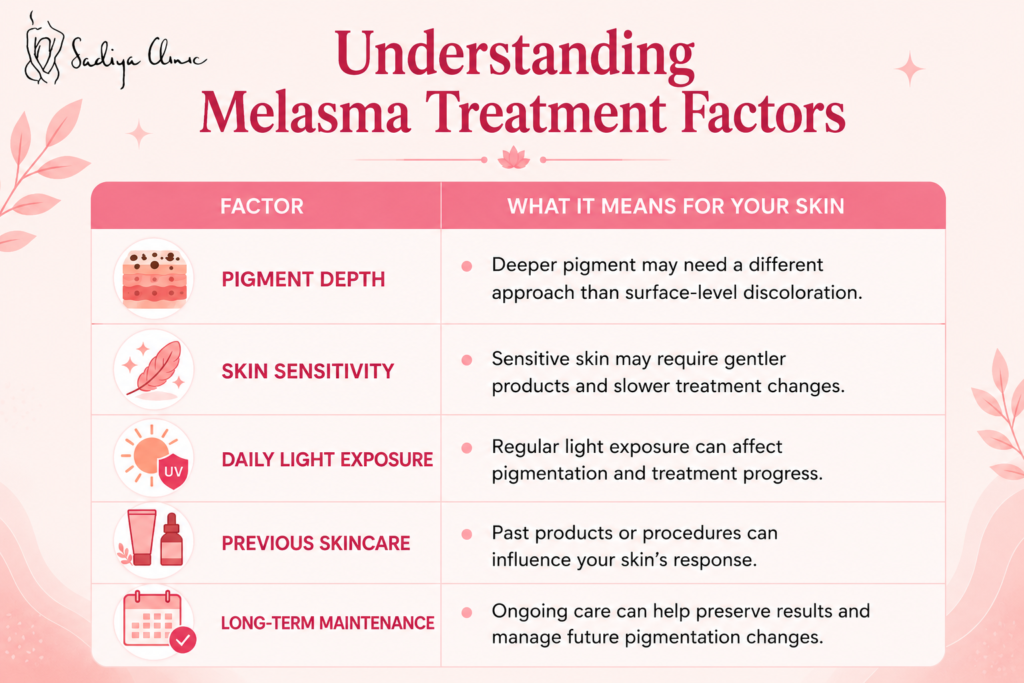
Melasma treatment may show early improvement within several weeks, although fuller changes can take months. Your response depends on pigmentation depth, treatment type, skin sensitivity, and daily protection. Therefore, patience remains important. Some people notice gradual fading first. Others need longer care before seeing clear changes. Consistent use also supports better outcomes over time.

A 2024 study in Acta Dermatovenerologica Alpina, Pannonica et Adriatica [2], assessed melasma improvement during treatment. Researchers evaluated changes at four and eight weeks. Both periods showed measurable progress. Therefore, some patients may notice early changes within the first month. However, results can differ between individuals. Continued care remains important for achieving gradual and lasting improvement. 

Which Approach Is Best for Different Types of Melasma?

Approaches for melasma include topical care, sun protection, prescription options, and selected procedures. The right choice depends on pigment depth, skin tone, severity, and treatment history. Mild cases may need simpler care. Deeper patterns can require additional options. Therefore, professional assessment helps match treatment intensity with your skin needs and lowers unnecessary irritation.

Epidermal Melasma

This type affects the upper skin layers, where excess pigment stays closer to the surface. Topical treatments may work well here. Daily sun protection can also help prevent further discoloration.

Mixed Melasma

Mixed melasma involves both superficial and deeper pigment. Because of this, treatment may require several approaches. A professional can combine topical products with selected procedures after assessing your skin carefully.

Dermal Melasma

This pattern involves pigment deeper within the skin. It may respond more slowly to treatment. Therefore, professionals may consider specialized procedures alongside suitable topical products after reviewing your individual needs.

Persistent Melasma

Long-lasting pigmentation may need a stepwise treatment plan. If earlier options provide limited improvement, your provider can adjust the approach. Maintenance care may also help manage recurring discoloration.

A 2025 review in Dermatopathology [3], examined melasma treatments alongside pigment depth. Researchers reviewed human studies with tissue-based findings. The evidence suggested different responses among epidermal and dermal patterns. However, treatment data remain limited for several options. Therefore, understanding pigment depth can help guide personalized care and support more suitable treatment decisions.

Explore the Right Melasma Treatment for Your Skin at Sadiya Clinic

You may feel frustrated when dark patches remain despite trying different creams and skincare routines. Melasma can affect your confidence, especially when pigmentation keeps returning. You may also feel unsure about which treatment suits your skin. Getting professional guidance can help you understand your condition and choose a suitable approach.

At Sadiya Clinic, you can receive personalized guidance based on your skin concerns and pigmentation pattern. Our team can help you explore suitable melasma treatment options and create a care plan focused on your needs. Contact us today to take the next step toward more even-looking skin. Email us at sadiya@sadiyaclinic.com to discuss your skin concerns with our team.

FAQs

Can melasma get worse after stopping treatment?

Yes, melasma can become darker or return after stopping treatment. This often happens when triggers remain active. Sunlight, visible light, hormonal changes, and skin irritation may contribute. Therefore, continue suitable skincare and daily sun protection. If pigmentation returns, consult a qualified professional for guidance on your next treatment steps.

Can melasma be permanently cured?

No, melasma cannot be permanently cured in every case. However, treatment can reduce visible pigmentation and improve skin tone. Results depend on consistent care and trigger control. Since melasma may return, ongoing protection remains important. A qualified skin professional can recommend suitable maintenance care based on your individual skin needs.

Can skincare products make melasma darker?

Yes, certain skincare products can make melasma appear darker. Harsh ingredients may irritate your skin and trigger more pigmentation. Therefore, choose gentle, fragrance-free products when possible. Introduce new products gradually and monitor your skin closely. If burning, redness, or increased darkness develops, stop using the product and seek professional advice.

Should you exfoliate when you have melasma?

You can exfoliate with melasma, but gentle care matters. Avoid harsh scrubs and frequent peeling because irritation may deepen discoloration. Instead, choose mild products suited to your skin. Introduce them slowly and watch for redness or burning. If sensitivity develops, stop using the product and seek professional guidance before continuing.

Can melasma appear on areas other than the cheeks?

Yes, melasma can appear beyond the cheeks. Common areas include the forehead, nose, upper lip, chin, and jawline. These patches often develop on skin exposed to light. However, patterns can vary between people. If you notice new or changing pigmentation, a professional assessment can help identify its cause accurately.

References

  1. Getachew, E. D., Kamal, K., Young, K., Xiang, D. H., Semenov, Y., Mostaghimi, A., & Theodosakis, N. (2024). A case-control study of racial differences in melasma risk factors and incidence in a diverse national United States population. Journal of the American Academy of Dermatology, 91(3), 539–541.
  1. Yasnova, N., Sirait, S. P., & Rahmayunita, G. (2024). The effectiveness and safety of 3% tranexamic acid cream vs. 4% hydroquinone cream for mixed-type melasma in skin of color: A double-blind, split-face, randomized controlled trial. Acta Dermatovenerologica Alpina, Pannonica et Adriatica, 33(2), 83–88.
  1. Zhang, A. D., Lazar, M., Akhundova, E., Brem, C. E., Beltrami, E. J., & Vashi, N. A. (2025). A scoping review on melasma treatments and their histopathologic correlates. Dermatopathology, 12(2), 13.

Aesthetician, Melasma

PDO Thread Lift

A PDO thread lift is a minimally invasive treatment that uses dissolvable threads to support mildly sagging facial tissue. It can create a subtle lifting effect without traditional facelift surgery. The procedure may also improve facial contours. However, results vary based on your skin, anatomy, treatment area, and the technique used by your provider.

If you are considering a PDO thread lift, professional guidance can help you choose the right approach. At Sadiya Clinic, you can discuss your goals, treatment options, and expected results with a qualified provider. Explore our concierge services for personalized support. Schedule a consultation today and take the next step toward informed, confident treatment planning.

Could You Be a Suitable Candidate for a PDO Thread Lift?

You may be a suitable candidate if you have mild facial sagging and want a subtle lift. A PDO thread lift can suit people seeking a non surgical facelift option. Your skin, facial shape, treatment goals, and expectations also matter. However, a consultation can help confirm whether this treatment suits your needs.

According to a 2026 study in Plastic and Reconstructive Surgery [1], researchers assessed a new PDO thread lifting approach in 83 patients. The findings showed favorable results with few complications. However, individual factors still matter. Your facial structure, skin condition, treatment goals, and expectations can affect suitability. Therefore, a qualified provider should assess you before recommending PDO thread treatment.

Which PDO Thread Lift Benefits May Improve Your Appearance?

PDO thread lift benefits may include subtle lifting, improved facial contours, and temporary tissue support. The treatment can target areas with mild skin laxity. Unlike surgery, it uses small entry points. Your results depend on skin quality, facial structure, thread placement, and provider technique. Therefore, realistic expectations remain important before treatment.

Potential benefits may include:

  • Temporary lifting: Threads can support mildly sagging facial tissue.
  • Improved contours: Treatment may enhance definition around selected facial areas.
  • Targeted correction: Providers can focus on areas needing subtle improvement.
  • Minimal incisions: The procedure uses small entry points instead of large surgical cuts.
  • Collagen response: PDO material may encourage changes in surrounding tissue.
  • Limited downtime: Recovery is generally shorter than traditional facelift surgery.

A PDO thread lift can provide subtle facial rejuvenation without traditional facelift surgery. Results vary between individuals. Your skin condition, facial structure, and treatment area can affect the outcome. Moreover, threads cannot provide the same correction as surgery. A qualified provider can assess your features and recommend an approach that matches your goals.

What Should You Expect During PDO Thread Lift Recovery?

PDO thread lift recovery may involve swelling, bruising, tenderness, and mild tightness. These effects usually improve as your skin heals. You may notice some lifting soon after treatment. However, swelling can affect the early appearance. Follow your provider’s aftercare advice carefully. Avoid pressure, strenuous activity, and unnecessary facial movements during the early healing period.

According to a 2024 systematic review in Dermatologic Surgery [2], researchers examined PDO thread lift outcomes and safety. The review found early improvements after treatment. However, patients also reported effects such as swelling, bruising, and discomfort. These issues were generally temporary. Therefore, following aftercare guidance remains important during healing. Individual recovery can still vary between patients.

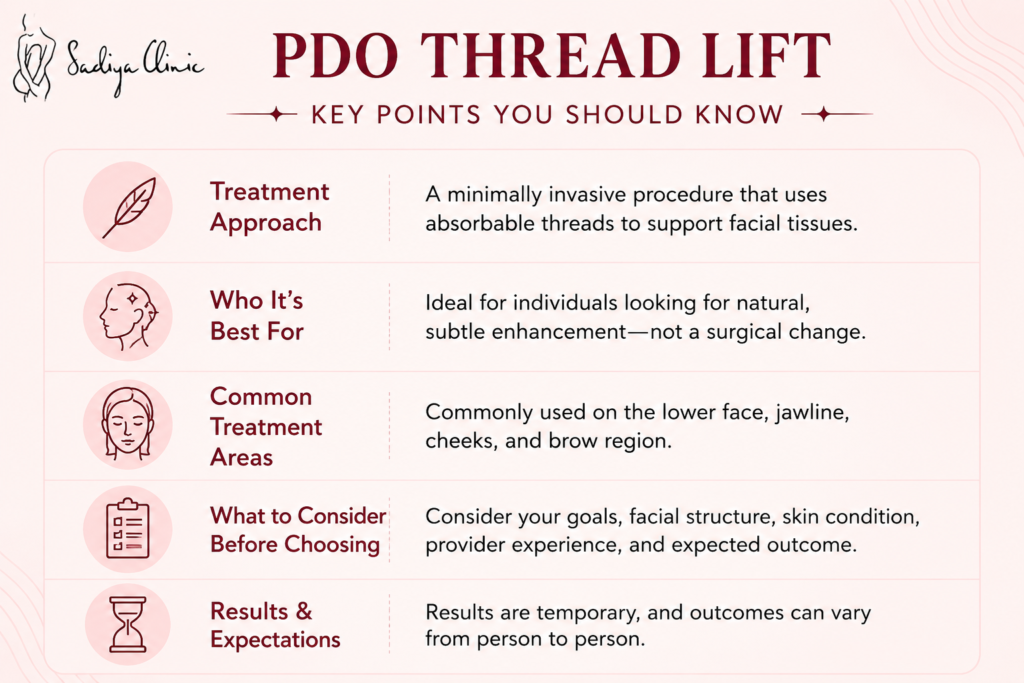
PDO thread lift key points to know

How Long Does a PDO Thread Lift Last, and What Results Can You Expect?

PDO thread lift results are temporary, and their duration varies between individuals. You may notice lifting soon after treatment. Swelling can change the early appearance. Skin quality, thread type, treatment area, facial structure, and technique also affect results. Your provider can explain the expected timeline and changes during recovery.

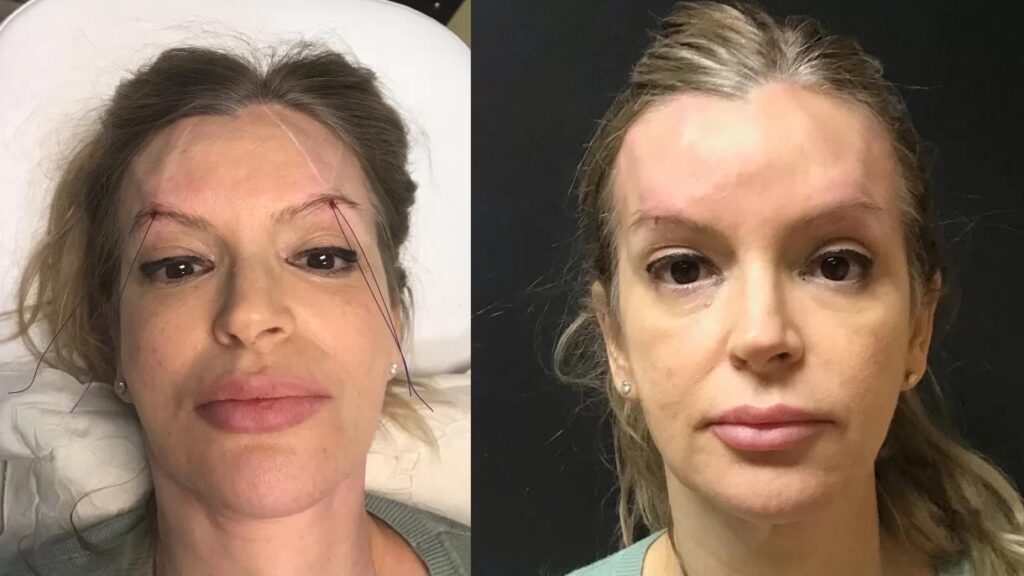
PDO Threads Before and After

Before-and-after photos can show changes in facial contour and lifting. However, lighting, facial expression, camera angle, and swelling can affect comparisons. Choose images taken under similar conditions for a more useful comparison.

PDO Thread Lift for Jawline

A PDO thread lift for jawline treatment may provide temporary support around the lower face. It can improve definition when mild laxity affects the contour. Results depend on anatomy, skin quality, thread placement, and technique.

PDO Thread Lift for Brow Lift

A PDO thread lift for brow lift treatment can provide subtle elevation around selected areas. Your natural brow position, skin laxity, facial structure, and thread placement can influence the final appearance and symmetry over time.

According to a 2025 study in Aesthetic Surgery Journal Open Forum [3], researchers examined PDO thread lifting over 60 days. Patients showed changes in facial volume and tissue position. However, these effects became smaller during follow-up. Adding more threads did not improve outcomes significantly. Therefore, results may change with time. Realistic expectations remain important before treatment.

PDO thread lift before after results

Explore Your PDO Thread Lift Options at Sadiya Clinic

You may want a fresher, more defined appearance but feel unsure about which treatment suits you. You may also worry about recovery, discomfort, risks, or unrealistic results. Searching for reliable information can make the decision harder. You deserve clear guidance that helps you understand your options before choosing a cosmetic treatment.

At Sadiya Clinic, you can discuss your concerns and facial goals with a qualified provider. Learn about the procedure, recovery, and expected results. You can also explore suitable treatment areas. Contact us today to discuss your options, or email sadiya@sadiyaclinic.com for personalized guidance before your treatment.

FAQs

Are PDO thread lifts painful?

PDO thread lifts may cause mild discomfort, pressure, or pulling during treatment. Your provider usually uses local anesthesia to improve comfort. Some tenderness can remain afterward. However, pain levels vary between individuals and treatment areas. Following your provider’s aftercare instructions can also help keep discomfort manageable during the early recovery period.

What are the risks of a PDO thread lift?

PDO thread lifts can cause swelling, bruising, tenderness, or temporary unevenness. Less common problems include infection, dimpling, thread visibility, or asymmetry. These effects can vary between individuals. Choosing an experienced provider may reduce certain risks. Contact your provider promptly if you notice severe pain, worsening swelling, or unusual skin changes.

Can you sleep normally after a PDO thread lift?

You may need to adjust your sleeping position temporarily after a PDO thread lift. Sleep on your back with your head slightly elevated. Avoid pressing your face against the pillow. This can reduce pressure on treated areas. Follow your provider’s specific instructions, as recovery needs can vary between individuals.

What should you avoid after a PDO thread lift?

After a PDO thread lift, avoid strenuous exercise, facial massage, and pressure on treated areas. Also, limit excessive facial movements during early healing. Avoid sleeping directly on the treated area also. Follow your provider’s aftercare instructions carefully. These steps can support healing and reduce unnecessary irritation during recovery.

Can PDO threads be removed if you are unhappy with the results?

Yes, a clinician can sometimes remove PDO threads if you are unhappy with the result. However, complete removal may not always be possible because the material gradually dissolves. Early assessment can help determine the best option. Your provider may recommend observation, adjustment, or removal based on your specific concerns.

References

  1. Yu, A. Y., & Pu, L. L. Q. (2026). Polydioxanone (PDO) thread lift for face: A novel anatomical approach. Plastic and Reconstructive Surgery.
  2. Riopelle, A. M., Geisler, A. N., Eber, A., & Dover, J. S. (2025). Update on absorbable facial thread lifts. Dermatologic Surgery, 51(5), 509–514.
  3. Germani, M. M., Teixeira, A. B., & Diniz, D. A. (2025). Polydioxanone threads in facial tissue: A randomized clinical trial. Aesthetic Surgery Journal Open Forum.

Aesthetician, Facial Balancing, PDO thread

Dermal Fillers Results

Dermal fillers are injectable products that add volume beneath the skin. They can soften facial lines and improve certain contours. Common treatment areas include the lips, cheeks, and under-eye region. Different formulas serve different purposes. Therefore, treatment results can vary based on the product, placement, technique, and your natural facial structure.

If you are exploring this treatment, reliable information can make your decision easier. At Sadiya Clinic, you can receive professional guidance throughout the process. You can learn about available options, possible outcomes, and important aftercare steps. This helps you understand what suits your needs before proceeding. Schedule a consultation today to learn more about your options. You can also explore Sadiya Clinic’s concierge services for personalized support.

What Are the Different Types of Dermal Fillers?

Different dermal fillers use different materials, including hyaluronic acid, calcium hydroxylapatite, poly-L-lactic acid, and PMMA. Hyaluronic acid fillers are widely used for lips, cheeks, and facial lines. Calcium hydroxylapatite can restore deeper volume and definition. Poly-L-lactic acid works gradually by supporting collagen production. PMMA offers longer-lasting correction in specific approved applications. Each option has different properties and uses.

According to the FDA [1], dermal fillers contain different materials for specific cosmetic uses. Hyaluronic acid supports temporary volume and smoothing. Calcium hydroxylapatite provides longer-lasting correction. Poly-L-lactic acid works gradually over time. PMMA offers a permanent option. Each material has distinct properties, effects, and approved uses. Therefore, providers select products according to individual treatment needs.

What Are the Main Dermal Filler Benefits for Your Appearance?

Dermal fillers can enhance facial appearance by restoring volume and improving definition. They may soften certain lines and create smoother contours. Depending on your needs, treatment can refine the lips, cheeks, or under-eye area. Moreover, carefully placed filler can support better facial balance while maintaining your natural expressions and appearance.

Here are some common benefits you may notice:

  • Restored facial volume: Fillers can replace fullness that decreases with age.
  • Smoother appearance: They may soften certain lines and folds.
  • Enhanced lips: Lip fillers can improve shape, fullness, and definition.
  • Defined cheeks: Cheek fillers can create subtle contour and structure.
  • Improved facial balance: Strategic placement can enhance overall symmetry.
  • Subtle enhancement: A personalized approach can create refined changes without altering your natural look.

Dermal fillers offer versatile options for different cosmetic concerns. However, results depend on the product, placement, and treatment area. Your facial structure also influences the final appearance. Therefore, a qualified provider should assess your features before treatment. This evaluation helps determine an appropriate approach. It also supports realistic expectations and balanced results that complement your existing appearance.

How Long Do Dermal Fillers Last and When Will You See Results?

Dermal filler results can appear soon after treatment and may last several months or longer. However, the exact duration depends on the product, treatment area, and your individual response. Early swelling can affect the initial appearance. Therefore, results become clearer as swelling settles. Your provider can explain the expected timeline based on your selected filler.

According to a systematic review published in Medicina (Kaunas) [2], dermal filler effects can remain visible for six to 24 months. However, duration varies between products and treatment areas. Results may appear soon after treatment, although early swelling can affect their appearance. Therefore, your provider can explain the expected timeline based on the selected filler and treatment area.

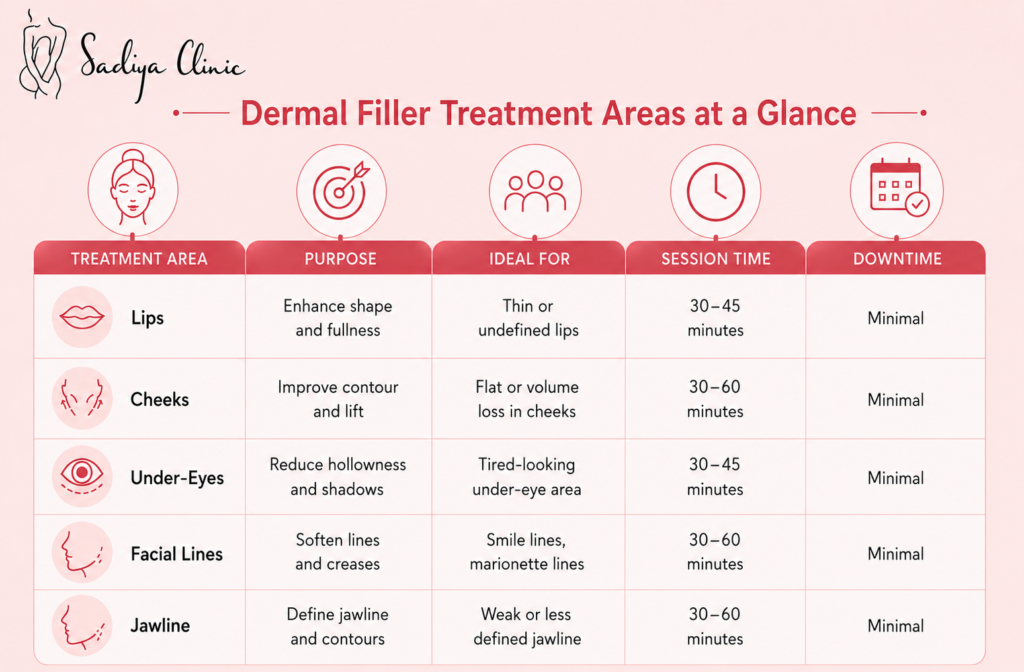
Dermal filler treatment areas at a glance

What Should You Expect Before, During, and After Dermal Filler Treatment?

You can expect a consultation before treatment, careful injections during the procedure, and temporary reactions afterward. First, your provider reviews your goals and medical history. Next, they assess your facial features and treatment area. During treatment, they cleanse the skin and place the product carefully. Afterward, mild swelling, redness, or tenderness may occur. These effects usually improve as your skin settles.

Before Your Dermal Filler Treatment

Your consultation helps identify suitable treatment areas and realistic goals. Your provider reviews relevant health details and examines your facial structure. They may also discuss product choices, expected results, possible risks, and preparation steps.

During the Dermal Filler Procedure

The provider cleanses the selected area before treatment. Then, they use a fine needle or cannula to place the product carefully. The technique depends on the location and desired outcome. You may feel brief pressure or mild discomfort.

Dermal Filler Recovery and Aftercare

Temporary swelling, redness, bruising, or tenderness can occur after injections. These effects usually settle gradually. Follow your provider’s aftercare guidance carefully. Avoid unnecessary pressure on treated areas. Also, contact your provider if unusual or persistent symptoms develop.

Your Dermal Filler Results

You may notice changes soon after treatment. However, early swelling can affect the appearance. Results become easier to assess as the treated area settles. Your provider can explain when to expect the final outcome. Individual healing times can differ.

Research published in Aesthetic Plastic Surgery [3] reviewed adverse events after hyaluronic acid filler injections. Common reactions included swelling, pain, redness, bruising, firmness, and tenderness. Most effects were temporary and manageable. Therefore, knowing these possible responses can help you prepare for recovery. Your provider can also explain warning signs and appropriate aftercare before treatment begins. 

Dermal Fillers before after results

Start Your Personalized Dermal Filler Consultation at Sadiya Clinic

You may want to soften facial lines, restore lost volume, or enhance your natural features. However, choosing the right filler can feel confusing. You may also worry about looking unnatural, selecting the wrong treatment area, or not knowing what results to expect. These concerns can make you hesitate before starting treatment.

At Sadiya Clinic, you can discuss your concerns with a qualified provider before treatment. Your facial features help guide the recommended approach. Your goals and treatment area also matter. The team can explain suitable filler options, expected results, and aftercare. This guidance helps you make informed choices with confidence. Contact us today to discuss your goals. You can also email sadiya@sadiyaclinic.com for more information.

FAQs

Are Dermal Fillers Safe for First-Time Patients?

Dermal fillers can be safe for first-time patients when a qualified provider performs the treatment. However, your medical history, skin condition, and treatment goals matter. Therefore, a proper consultation should come first. Your provider can assess your needs, explain possible risks, and choose a suitable product and treatment approach.

How Much Do Dermal Fillers Cost?

Dermal filler costs vary based on the product, treatment area, amount needed, and provider’s expertise. For example, lip fillers may require a different amount than cheek treatments. Therefore, an exact price requires a personal consultation. Your provider can assess your goals and recommend an appropriate treatment plan with clear pricing.

Can You Wear Makeup After Getting Dermal Fillers?

You can usually wear makeup after dermal fillers, but waiting several hours can help protect treated areas. Avoid rubbing or pressing the skin during application. Instead, use clean hands and gentle products. Your provider may suggest waiting longer, especially after extensive treatment. Follow their specific instructions for the safest recovery.

What Should You Avoid After Dermal Filler Injections?

After dermal filler injections, avoid strenuous exercise, excessive heat, alcohol, and unnecessary pressure on treated areas. Also, do not massage or touch the injection sites unless your provider advises it. For the first day, keep your routine gentle. Follow your clinic’s aftercare instructions carefully to support comfortable recovery and optimal results.

Can Dermal Fillers Look Natural?

Yes, dermal fillers can look natural when a qualified provider uses the right product and amount. Your facial structure, treatment goals, and skin condition also matter. Therefore, subtle placement often creates balanced results. A personalized approach helps maintain your natural expressions while improving volume, shape, or facial definition.

References

  1. U.S. Food and Drug Administration. (n.d.). FDA-approved dermal fillers. U.S. Department of Health and Human Services.
  2. Janovskiene, A., Chomicius, D., Afanasjevas, D., Petronis, Z., Razukevicius, D., & Jagelaviciene, E. (2025). Safety and potential complications of facial wrinkle correction with dermal fillers: A systematic literature review. Medicina, 61(1), 25.
  3. Kyriazidis, I., Spyropoulou, G.-A., Zambacos, G., Tagka, A., Rakhorst, H. A., Gasteratos, K., Berner, J. E., & Mandrekas, A. (2024). Adverse events associated with hyaluronic acid filler injection for non-surgical facial aesthetics: A systematic review of high level of evidence studies. Aesthetic Plastic Surgery, 48(4), 719–741.

Aesthetician, Dermal Filler, Facial Balancing, The Sadiya Clinic

Lip Fillers

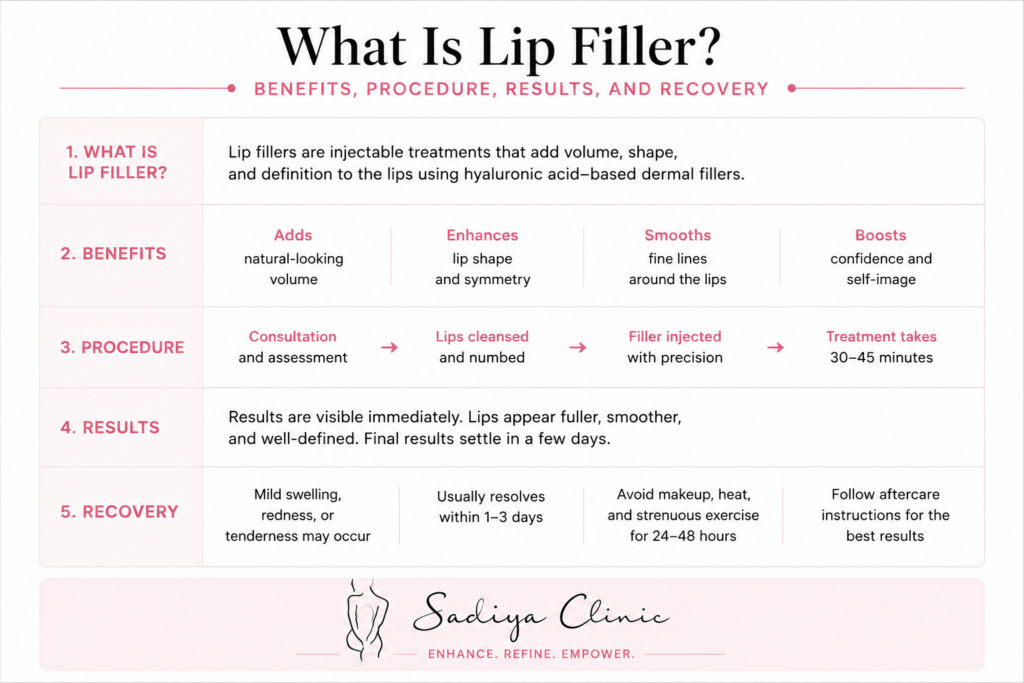
Lip filler is a simple, non-surgical treatment that adds volume, improves lip shape, and enhances natural definition. Most lip fillers contain hyaluronic acid, a naturally occurring substance that helps retain moisture and create soft, natural-looking results. If you want fuller lips or better symmetry, lip filler offers a safe and effective way to achieve natural-looking results with little downtime.

If you have been thinking about enhancing your lips but are unsure where to start, you are not alone. At Sadiya Clinic, we take the time to understand your goals and create a personalized treatment plan that complements your facial features. Schedule a consultation today and discover how expertly performed lip filler treatments can enhance your confidence and appearance.

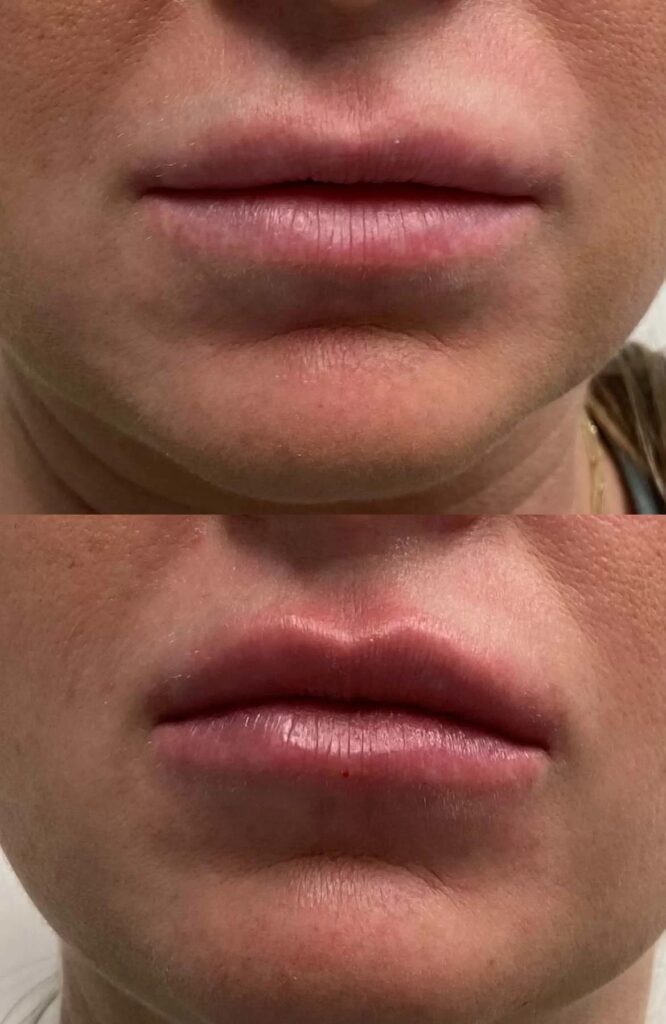
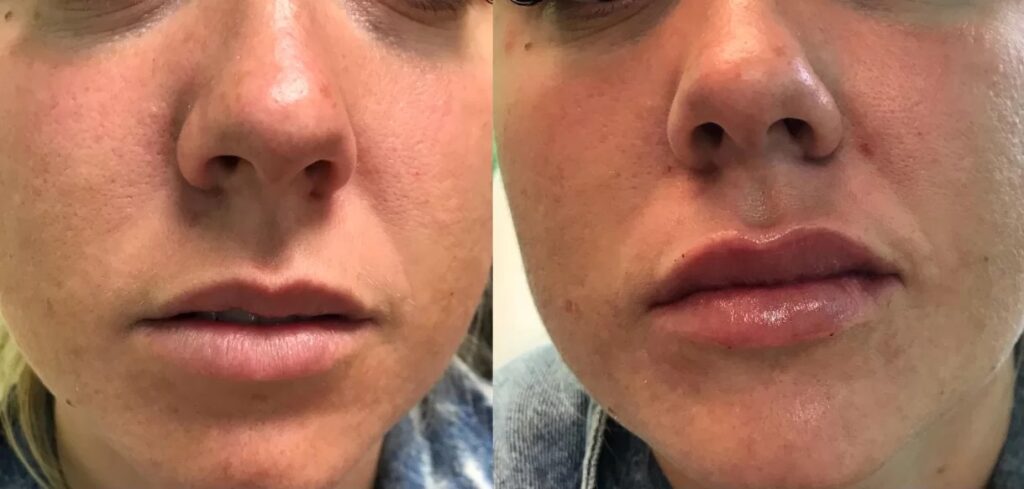
Lip Filler Results

How Does Lip Filler Work to Enhance Your Lips?

Lip filler works by adding volume beneath the skin to improve the shape, definition, and fullness of your lips. Most lip fillers used today contain hyaluronic acid, a naturally occurring substance that attracts moisture and creates soft, natural-looking volume. During treatment, your provider carefully places the filler into targeted areas to enhance your lips while maintaining facial balance.

According to a review published in the Journal of Cutaneous and Aesthetic Surgery [1], hyaluronic acid is the preferred filler for lip augmentation because it delivers soft, natural-looking results and has a strong safety record. The authors also note that your outcome depends not only on the filler but also on the provider’s skill, experience, and injection technique.

What Are the Benefits of Lip Fillers?

Lip filler offers a simple way to enhance the shape, volume, and definition of your lips without surgery. Whether you want a subtle change or a fuller appearance, the treatment can be tailored to your goals. It also helps improve lip symmetry and restore volume that naturally decreases with age, giving your lips a balanced, refreshed look.

Benefits of lip filler include:

  • Enhances Lip Volume: Adds fullness to naturally thin lips or restores volume lost with age.
  • Improves Lip Symmetry: Balances uneven lips for a more harmonious appearance.
  • Defines the Lip Border: Creates a sharper cupid’s bow and more defined lip edges.
  • Creates Subtle Lip Filler Results: Delivers natural-looking enhancement without an overfilled look.
  • Smooths Fine Lines: Softens vertical lines around the mouth for a younger appearance.
  • Offers Customizable Treatment: Your provider adjusts the amount of filler based on your goals.
  • Requires Minimal Downtime: Most people return to normal activities within a day.

One of the biggest advantages of lip filler is that the treatment is highly personalized. Your provider can make small, gradual adjustments to achieve results that suit your facial features and preferences. With proper treatment and lip filler aftercare, you can enjoy natural-looking lips that enhance your appearance while preserving your unique beauty.

What Happens During a Lip Filler Procedure and How Long Does Lip Filler Last?

A lip filler procedure begins with a consultation to discuss your goals and assess your lip shape. Your provider then applies a numbing cream before performing a filler lip injection in carefully selected areas. The treatment usually takes 30 to 45 minutes. Lip filler typically lasts 6 to 12 months, although results vary depending on the filler type, your metabolism, and lifestyle.

According to Cleveland Clinic [2], most lip filler treatments take less than an hour and provide immediate results, although mild swelling may temporarily affect your appearance. Hyaluronic acid fillers generally last 6 to 12 months, depending on the product used and your body’s metabolism. Follow-up treatments can help maintain your desired lip shape, volume, and definition over time.

What is Lip Filler? Benefits, procedure, results and recovery explained

What Should You Know About Lip Filler Aftercare for the Best Results?

Lip filler aftercare plays an important role in helping your lips heal properly and achieve the best possible results. Following your provider’s instructions can reduce swelling, minimize bruising, and lower the risk of complications. Simple steps, such as avoiding excessive heat, strenuous exercise, and unnecessary pressure on your lips, can support a smoother recovery and help your results last longer.

Follow Proper Lip Filler Aftercare

Follow all aftercare instructions provided by your practitioner. Avoid touching or massaging your lips unless advised otherwise. Proper lip filler aftercare supports healing, reduces discomfort, and helps the filler settle evenly for smooth, natural-looking results.

Avoid Activities That Increase Swelling

Avoid strenuous exercise, alcohol, smoking, hot showers, saunas, and prolonged sun exposure for the first 24 to 48 hours. These activities can increase swelling and bruising, which may delay your recovery after a filler lip injection.

Reduce Swelling and Support Healing

Use a cold compress for short intervals during the first day to minimize swelling. Stay hydrated, avoid salty foods, and sleep with your head elevated. These simple post lip filler care steps can make your recovery more comfortable.

Know When to Expect Final Results

You will notice fuller lips immediately after treatment. However, mild swelling may temporarily affect your appearance. Most lip fillers before and after results become visible within one to two weeks, once the filler settles and your lips heal completely.

Understanding Lip Filler Training and Choosing the Right Provider

While you may come across lip filler training in Vienna VA and other professional training programs, these courses are intended for licensed healthcare professionals. As a patient, your priority should be choosing a qualified and experienced provider who performs lip filler treatments safely and focuses on achieving natural, balanced results.

According to Healthline [3], keeping your lips clean, staying hydrated, and avoiding activities that increase blood flow during the first 24 to 48 hours can support a smoother recovery. The article also recommends delaying lipstick application and limiting sun exposure until your lips have healed, helping you achieve the best possible treatment outcome.

Lip Filler Before and After Results

Enhance Your Lips with Natural-Looking Lip Filler Today with Sadiya Clinic 

If you have been thinking about enhancing your lips but worry about looking overfilled or unnatural, you are not alone. Many people want fuller, well-defined lips that still look like their own. With the right treatment and an experienced provider, you can achieve subtle, balanced results that complement your natural features.

At Sadiya Clinic, we take the time to understand your goals before recommending a personalized lip filler treatment plan. Our experienced team focuses on enhancing your natural beauty while prioritizing your comfort and safety throughout the process. Contact us today and let us help you achieve beautiful, natural-looking lips with confidence.

FAQs

How long does lip filler last?

Lip filler typically lasts 6 to 12 months. However, the exact duration depends on the type of filler, your metabolism, lifestyle, and the treatment area. Regular touch-up appointments can help maintain your desired lip shape and volume while keeping your results natural and consistent.

Is a filler lip injection painful?

A filler lip injection usually causes only mild discomfort. Most providers apply a topical numbing cream before treatment, and many fillers also contain lidocaine to improve comfort. You may feel slight pressure or a brief pinch during the injections, but the procedure is generally well tolerated by most patients.

What should I include in my post lip filler care routine?

Proper post lip filler care includes avoiding strenuous exercise, alcohol, smoking, excessive heat, and unnecessary pressure on your lips for the first 24 to 48 hours. Applying a cold compress, staying hydrated, and following your provider’s instructions can reduce swelling, support healing, and help you achieve the best possible results.

How do I choose the best lip filler?

The best lip filler depends on your facial anatomy, lip shape, and cosmetic goals. During your consultation, your provider will recommend a suitable hyaluronic acid filler based on whether you want subtle enhancement, improved definition, or increased volume. A personalized treatment plan always delivers the most natural-looking outcome.

Can you get lip filler while pregnant?

Healthcare professionals generally advise against getting lip filler while pregnant or breastfeeding. Although hyaluronic acid fillers are considered safe for most adults, there is not enough research to confirm their safety during pregnancy. Waiting until after pregnancy and breastfeeding is the safest option for both you and your baby.

References

  1. Luthra, A. (2015). Shaping lips with fillers. Journal of Cutaneous and Aesthetic Surgery, 8(3), 139–142.
  1. Cleveland Clinic. (n.d.). Lip fillers: What they are, types, benefits, risks & side effects.
  1. Gallagher, G. (2025, July 9). 10 best aftercare tips for lip fillers. Healthline.

Aesthetician, botox, Facial Rejuvenation, Jawline Slimming, Wrinkles

  • 1
  • 2