Melasma is a common skin condition that causes brown or grayish patches, often across the face. Sun exposure, hormonal changes, genetics, and visible light can contribute. Effective care usually combines daily protection with suitable topical products or professional procedures. However, results vary by skin type, severity, triggers, and treatment history. Consistency also plays an important role.
Melasma can feel frustrating when dark patches remain despite regular skincare. At Sadiya Clinic, you receive personal guidance based on your skin needs. Our concierge services make your care simple and convenient. You can discuss your concerns and learn about suitable choices. Schedule a consultation today to take the next step toward healthier-looking, more even skin.
What Causes Melasma on the Face?
Melasma causes include sunlight, hormonal changes, genetics, and visible light exposure. These factors can increase pigment production in your skin. Pregnancy and hormonal medicines may also play a role. Your skin type can affect your risk as well. Often, several triggers work together rather than causing pigmentation alone. Therefore, identifying personal triggers can support better management.
A 2024 study in the Journal of the American Academy of Dermatology [1], examined factors linked with melasma. Researchers assessed hormonal and reproductive influences among affected patients. The findings add evidence that melasma has several contributing factors. Therefore, personal history may help explain why pigmentation develops or persists. This supports a broader approach when assessing individual cases.
Which Melasma Treatment Options Can Help Fade Dark Patches?
Melasma treatment options such as prescription creams, azelaic acid, chemical peels, and laser procedures can help fade dark patches. The right choice depends on your skin type, pigmentation level, and previous skincare. Therefore, a professional assessment can guide your care. Most plans also include daily sun protection. This helps prevent further darkening and supports gradual improvement.
Common options include:
- Prescription creams: Hydroquinone, tretinoin, and combination formulas can help reduce excess pigment.
- Azelaic acid: This ingredient may improve uneven color while supporting gentle skincare.
- Chemical peels: Professional peels can reduce surface pigment and refresh the skin.
- Laser treatments: Selected procedures may help stubborn discoloration when carefully planned.
- Sun protection: Daily broad-spectrum sunscreen helps prevent further darkening and supports progress.
Each approach works differently, so your skin needs careful assessment before treatment. Some methods may suit mild pigmentation, while others suit persistent cases. Moreover, professional supervision can lower irritation risks. A suitable routine can support gradual improvement and maintain clearer-looking skin. Consistency also remains important throughout your care journey, especially when managing recurring discoloration.
How Long Does Melasma Treatment Take to Show Results?
Melasma treatment may show early improvement within several weeks, although fuller changes can take months. Your response depends on pigmentation depth, treatment type, skin sensitivity, and daily protection. Therefore, patience remains important. Some people notice gradual fading first. Others need longer care before seeing clear changes. Consistent use also supports better outcomes over time.
A 2024 study in Acta Dermatovenerologica Alpina, Pannonica et Adriatica [2], assessed melasma improvement during treatment. Researchers evaluated changes at four and eight weeks. Both periods showed measurable progress. Therefore, some patients may notice early changes within the first month. However, results can differ between individuals. Continued care remains important for achieving gradual and lasting improvement.
Which Approach Is Best for Different Types of Melasma?
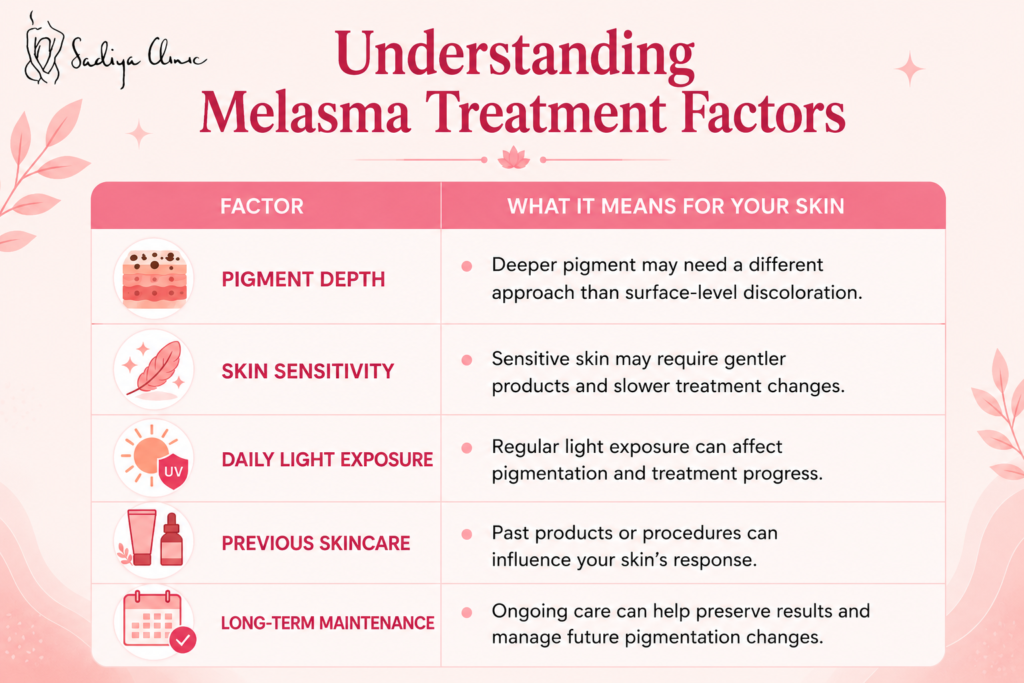
Approaches for melasma include topical care, sun protection, prescription options, and selected procedures. The right choice depends on pigment depth, skin tone, severity, and treatment history. Mild cases may need simpler care. Deeper patterns can require additional options. Therefore, professional assessment helps match treatment intensity with your skin needs and lowers unnecessary irritation.
Epidermal Melasma
This type affects the upper skin layers, where excess pigment stays closer to the surface. Topical treatments may work well here. Daily sun protection can also help prevent further discoloration.
Mixed Melasma
Mixed melasma involves both superficial and deeper pigment. Because of this, treatment may require several approaches. A professional can combine topical products with selected procedures after assessing your skin carefully.
Dermal Melasma
This pattern involves pigment deeper within the skin. It may respond more slowly to treatment. Therefore, professionals may consider specialized procedures alongside suitable topical products after reviewing your individual needs.
Persistent Melasma
Long-lasting pigmentation may need a stepwise treatment plan. If earlier options provide limited improvement, your provider can adjust the approach. Maintenance care may also help manage recurring discoloration.
A 2025 review in Dermatopathology [3], examined melasma treatments alongside pigment depth. Researchers reviewed human studies with tissue-based findings. The evidence suggested different responses among epidermal and dermal patterns. However, treatment data remain limited for several options. Therefore, understanding pigment depth can help guide personalized care and support more suitable treatment decisions.
Explore the Right Melasma Treatment for Your Skin at Sadiya Clinic
You may feel frustrated when dark patches remain despite trying different creams and skincare routines. Melasma can affect your confidence, especially when pigmentation keeps returning. You may also feel unsure about which treatment suits your skin. Getting professional guidance can help you understand your condition and choose a suitable approach.
At Sadiya Clinic, you can receive personalized guidance based on your skin concerns and pigmentation pattern. Our team can help you explore suitable melasma treatment options and create a care plan focused on your needs. Contact us today to take the next step toward more even-looking skin. Email us at sadiya@sadiyaclinic.com to discuss your skin concerns with our team.
FAQs
Can melasma get worse after stopping treatment?
Yes, melasma can become darker or return after stopping treatment. This often happens when triggers remain active. Sunlight, visible light, hormonal changes, and skin irritation may contribute. Therefore, continue suitable skincare and daily sun protection. If pigmentation returns, consult a qualified professional for guidance on your next treatment steps.
Can melasma be permanently cured?
No, melasma cannot be permanently cured in every case. However, treatment can reduce visible pigmentation and improve skin tone. Results depend on consistent care and trigger control. Since melasma may return, ongoing protection remains important. A qualified skin professional can recommend suitable maintenance care based on your individual skin needs.
Can skincare products make melasma darker?
Yes, certain skincare products can make melasma appear darker. Harsh ingredients may irritate your skin and trigger more pigmentation. Therefore, choose gentle, fragrance-free products when possible. Introduce new products gradually and monitor your skin closely. If burning, redness, or increased darkness develops, stop using the product and seek professional advice.
Should you exfoliate when you have melasma?
You can exfoliate with melasma, but gentle care matters. Avoid harsh scrubs and frequent peeling because irritation may deepen discoloration. Instead, choose mild products suited to your skin. Introduce them slowly and watch for redness or burning. If sensitivity develops, stop using the product and seek professional guidance before continuing.
Can melasma appear on areas other than the cheeks?
Yes, melasma can appear beyond the cheeks. Common areas include the forehead, nose, upper lip, chin, and jawline. These patches often develop on skin exposed to light. However, patterns can vary between people. If you notice new or changing pigmentation, a professional assessment can help identify its cause accurately.