Menopause treatment helps relieve common symptoms and supports your overall well-being. Modern care may include hormone therapy, non-hormonal medicines, and healthy lifestyle changes. Your treatment depends on your symptoms and medical history. The right approach can help you feel better and improve your health.
You do not have to manage menopause on your own. At Sadiya Clinic, we provide personalized care for your unique needs. We also offer convenient concierge services for added comfort and support. Schedule a consultation with our team to explore your treatment options and take the first step toward lasting symptom relief.
When Should You See a Doctor for Menopause Symptoms?
Medical advice is important when menopause begins to affect your daily routine or emotional health. Early care helps you understand your treatment options. It also helps prevent future health problems. Your healthcare provider can assess your condition and recommend the right treatment for you.
Research supports early medical evaluation during menopause. A 2022 review in the Journal of Mid-life Health [1], recommends checking your symptoms, menstrual history, and health. It also advises extra tests or specialist referral when needed. This approach helps identify the right treatment and supports better long-term health.
Which Menopause Symptoms Should You Never Ignore?
Some menopause symptoms should never be ignored, especially when they become severe or last for a long time. They may affect your daily routine, sleep, mood, and health. They can also signal another medical condition. Therefore, early evaluation helps identify the cause and ensures you receive the right treatment.
Common symptoms include:
- Hot flashes and night sweats.
- Heavy or unusual bleeding.
- Headaches or dizziness.
- Bloating and stomach discomfort.
- Skin changes or itching.
- Shoulder stiffness or pain.
- Poor sleep or ongoing fatigue.
- Mood changes, anxiety, or depression.
- Brain fog or difficulty concentrating.
- Nausea.
- Vaginal dryness or discomfort.
Do not ignore these changes if they continue or affect your daily life. Early care can help relieve discomfort and prevent further health problems. It also helps you stay active and maintain your daily routine. A healthcare provider can identify the cause and recommend the right treatment. Getting help early can make menopause easier to manage.
What Are the Most Effective Menopause Treatment Options Available Today?
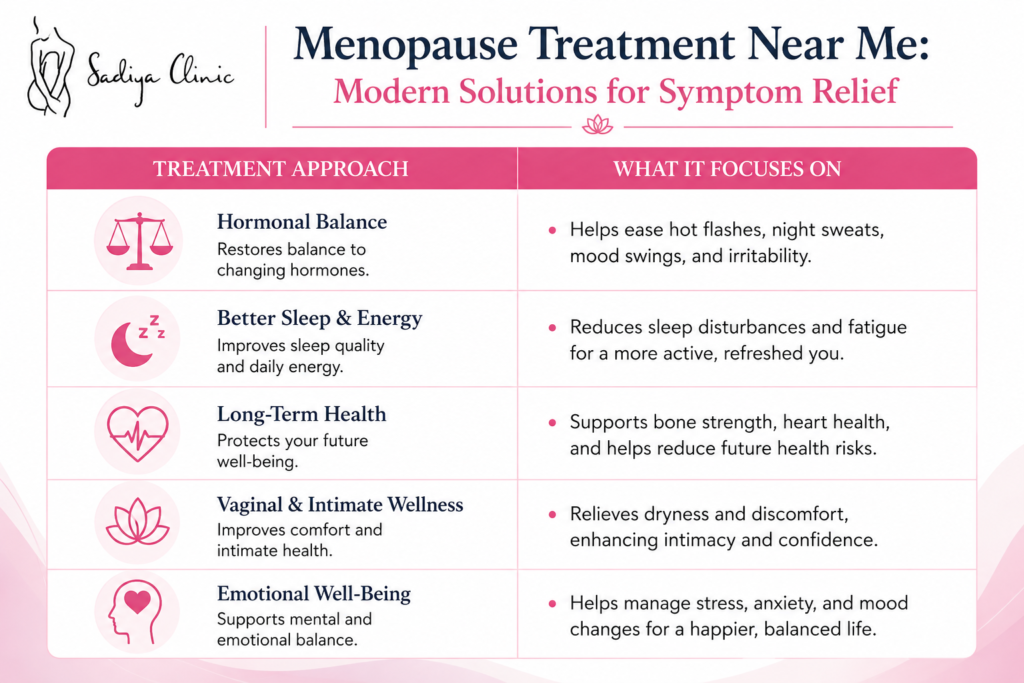
The most effective menopause treatment depends on your symptoms, age, and medical history. Hormone therapy helps many women manage common hormonal changes. Non-hormonal medicines, healthy lifestyle habits, and emotional support also provide relief. Your healthcare provider can recommend the option that best suits your health needs and personal goals.
Research supports personalized menopause treatment. A review in Australian Prescriber [2], recommends choosing care based on your symptoms and personal needs. It states that hormone therapy is effective for many women when appropriate. Non-hormonal treatments also provide relief. Regular follow-up helps review your progress and adjust your care when needed.
Where Can You Find the Right Menopause Specialist Near You?
Finding the right menopause specialist near me starts with choosing a qualified healthcare provider who understands hormonal changes. Look for someone who listens to your concerns and explains every treatment option clearly. A trusted provider offers personalized care, regular follow-up, and ongoing support. This approach helps you manage menopause with greater confidence.
Check the Provider’s Experience
Choose a provider with experience in menopause care. They should understand common symptoms and current treatment options. Experienced professionals can recommend care based on your needs and answer your questions with confidence.
Look for Personalized Care
Every woman experiences menopause differently. Choose a clinic that creates a treatment plan for your symptoms and health goals. Personalized care often leads to better comfort and long-term support.
Read Patient Reviews
Patient reviews can help you understand the quality of care. Look for positive feedback about communication, professionalism, and follow-up. Honest reviews also give you confidence before booking your first visit.
Choose a Convenient Clinic
A nearby clinic makes follow-up visits easier. Search for a menopause clinic near me or a menopause doctor near me to find accessible care. Easy access helps you stay consistent with your treatment plan.
According to a review published in Clinical Endocrinology [3], personalized menopause care improves treatment outcomes. The review recommends referral to a qualified menopause specialist when additional support is needed. Specialist care helps address complex concerns and provides tailored treatment. This approach improves symptom management, supports better long-term health, and helps women receive the most appropriate care.

Book Your Personalized Menopause Consultation Today with Sadiya Clinic
You do not have to deal with menopause symptoms every day. Hot flashes, poor sleep, mood changes, and body pain can make daily life harder. You may also feel tired or uncomfortable. Over time, these symptoms can affect your health, work, and relationships. Getting the right care early can help you feel better and regain your comfort.
At Sadiya Clinic, we create a personalized menopause treatment plan based on your symptoms and health needs. Our experienced team offers compassionate, evidence-based care at every step. Contact us today through our contact page or email us at sadiya@sadiyaclinic.com. We are here to help you find lasting relief and improve your quality of life.
FAQs
How long do menopause symptoms usually last?
Menopause symptoms vary from person to person. Many women experience them for four to eight years. However, some symptoms may last longer. Their severity also differs. Early evaluation and personalized treatment can improve symptom control. As a result, you may enjoy better comfort and a higher quality of life.
Can menopause start before age 40?
Yes, menopause can start before age 40, but it is uncommon. This condition is called premature menopause or primary ovarian insufficiency. It may result from genetics, certain medical treatments, or autoimmune conditions. Early diagnosis is important. Therefore, speak with your healthcare provider if your periods stop unexpectedly or symptoms appear early.
What tests can confirm menopause?
Most women do not need a test to confirm menopause. Your healthcare provider usually reviews your age, symptoms, and menstrual history. However, blood tests may help in some cases. These tests can measure hormone levels, including follicle-stimulating hormone (FSH). Your provider will decide whether testing is necessary.
Can you lose weight during menopause?
Yes, you can lose weight during menopause. However, it often requires more effort. Hormonal changes can slow your metabolism and increase fat storage. Even so, healthy eating and regular exercise support weight loss. Strength training also helps preserve muscle. A healthcare provider can recommend a plan that fits your needs.
Does health insurance cover menopause treatment?
Health insurance coverage depends on your plan. Many policies cover doctor visits and diagnostic tests. Some also include approved medications. However, certain treatments may need prior approval. Out-of-pocket costs can also vary. Therefore, review your policy carefully. You can also contact your insurance provider to confirm your menopause treatment benefits.