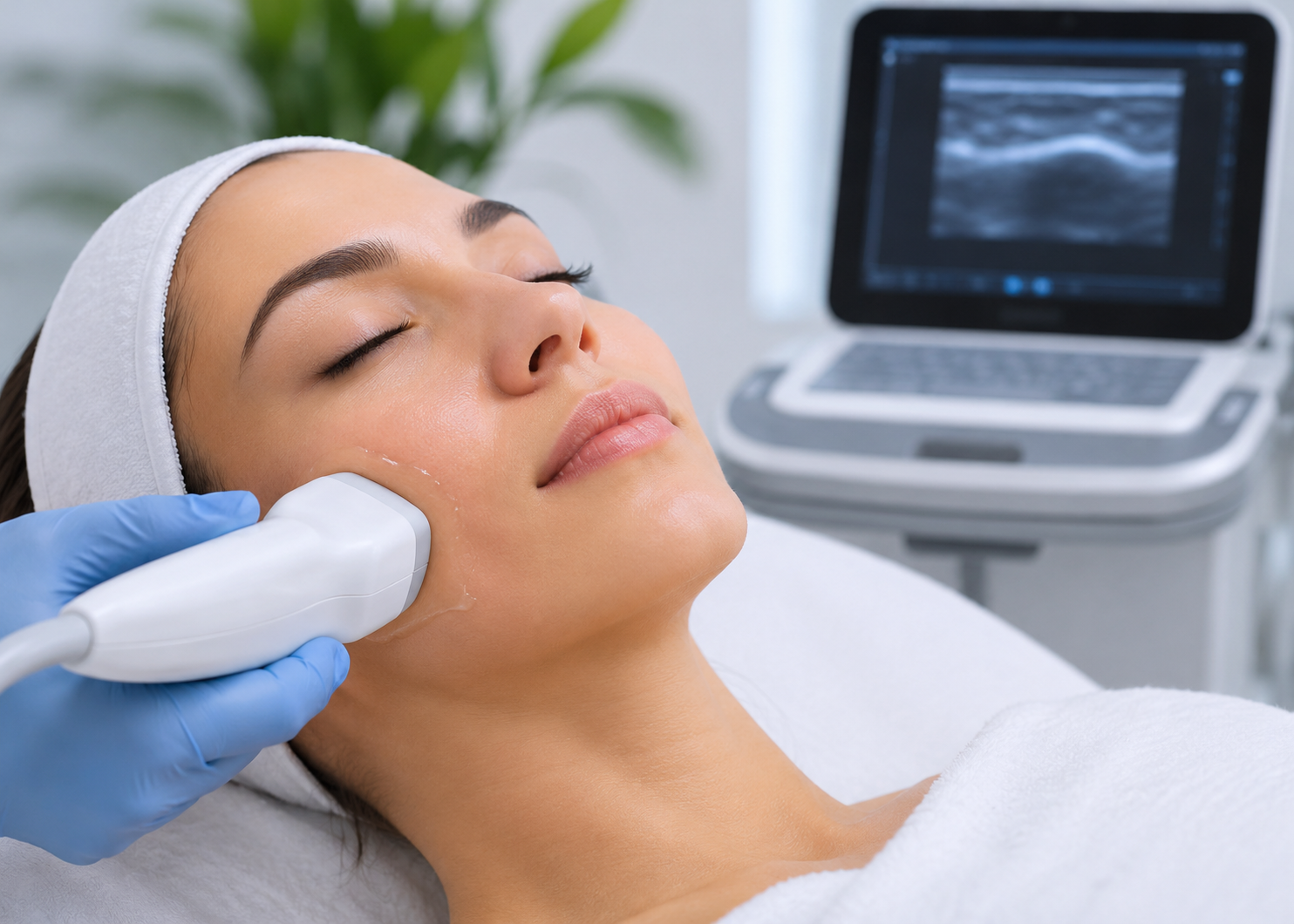
Facial ultrasound is a non-invasive imaging technique that uses high-frequency sound waves to examine structures beneath the skin. It helps practitioners visualise blood vessels, muscles, fat compartments, and existing filler. This technology supports better anatomical assessment before injectable treatments. Consequently, practitioners can plan more precise procedures and reduce avoidable complications.
Personalised aesthetic care can now come with added convenience. At Sadiya Clinic, Dr. Sadiya Naseem uses ultrasound assessment to support informed treatment decisions and natural-looking results. The clinic also provides concierge services within 25 miles of its Vienna location. These services include Botox, Xeomin, and most fillers. Minimum charges apply depending on the number of clients. Schedule a consultation today to discuss your aesthetic goals and explore suitable treatment options.
How Does Diagnostic Ultrasound Work Beneath the Skin?
Diagnostic facial ultrasound uses high-frequency sound waves to create images of structures beneath your skin. A handheld probe sends sound waves into facial tissues. These waves return as echoes when they meet different structures. The device converts these signals into images. This allows practitioners to examine muscles, fat compartments, connective tissues, and blood vessels.
A 2025 research paper published in Ultrasound in Medicine & Biology [1], highlights the role of diagnostic imaging in aesthetic dermatology. It explains how ultrasound helps examine facial tissues and identify important anatomical structures. Additionally, Doppler imaging supports blood vessel assessment. These methods help practitioners plan injectable treatments with better anatomical awareness.
How Does Facial Ultrasound Make Injectables Safer?
Facial ultrasound makes injectables safer by helping practitioners identify blood vessels and examine tissue layers before treatment. It provides real-time images of underlying structures. This allows injectors to assess anatomical variations and choose suitable placement depths. Consequently, imaging helps reduce avoidable risks during cosmetic procedures, although it cannot prevent every possible complication.
Here are the main ways ultrasound supports safer injectable treatments:
- Identifying Blood Vessels: Doppler imaging helps locate arteries and veins near planned injection sites. Practitioners can adjust their approach to avoid identified vessels.
- Checking Tissue Depth: Ultrasound shows different facial layers beneath the skin. This helps injectors select suitable placement depths for specific products.
- Detecting Existing Filler: Imaging reveals certain previous filler deposits. Therefore, practitioners can assess their position before adding more products.
- Supporting Complication Management: Ultrasound helps locate deposits associated with swelling or suspected vascular problems. It can also guide hyaluronidase towards targeted hyaluronic acid filler.
- Improving Injection Accuracy: Real-time imaging helps practitioners monitor needle or cannula positioning. This provides additional control during selected procedures.
Although facial ultrasound improves anatomical awareness, it does not guarantee complication-free treatments. Results still depend on practitioner training, product selection, and appropriate injection techniques. Furthermore, qualified injectors must understand facial anatomy and recognise warning signs. They should also maintain emergency protocols. Combining these measures with imaging helps support informed decisions and reduce avoidable treatment risks.
Which Treatments Can Use Facial Ultrasound?
Facial ultrasound can support several aesthetic treatments, including dermal fillers, Botox, Sculptra, Radiesse, and Kybella. It also helps practitioners assess previous injections and guide filler dissolving procedures. Each application serves a different purpose. However, imaging requirements depend on the product, treatment area, and individual anatomy.
A 2024 review published in Seminars in Ultrasound, CT and MRI [2], explores ultrasound applications in aesthetic medicine. It covers filler and non-filler procedures, including their imaging requirements. Additionally, the study explains how ultrasound helps practitioners examine facial anatomy and guide injections. These applications support more informed treatment planning and complication assessment.
Who Benefits Most From Ultrasound Guided Injections?
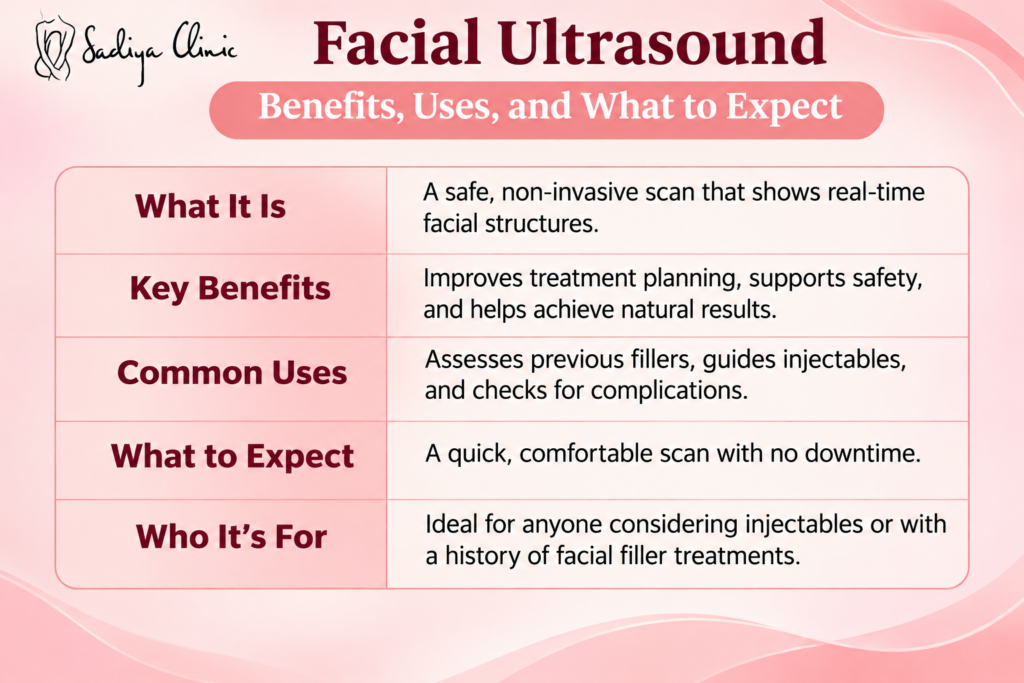
Ultrasound-guided injections can benefit patients who need detailed facial assessment before aesthetic treatments. They are particularly useful for people with previous fillers, uneven results, or concerns about complications. Additionally, individuals considering injections in complex facial areas may benefit from vascular mapping. However, suitability depends on personal anatomy, treatment goals, and practitioner recommendations.
Patients With Previous Filler Treatments
If you have received fillers before, ultrasound can help locate existing deposits. This information helps practitioners assess their position and avoid unnecessary product placement during future procedures.
Individuals Experiencing Filler Migration
Unwanted fullness, swelling, or irregular contours may indicate filler migration. Ultrasound helps examine affected areas and identify deposits that require further assessment or corrective treatment.
Patients Considering High-Risk Treatment Areas
The forehead, temples, and nose contain complex blood vessel networks. Imaging helps practitioners map these structures before injections and select more appropriate treatment approaches.
Individuals Seeking Filler Dissolving
If you want to remove unwanted hyaluronic acid filler, ultrasound can locate specific deposits. This allows practitioners to guide hyaluronidase towards targeted areas more precisely.
Patients With Previous Injection Complications
Persistent lumps, swelling, or suspected vascular problems require careful assessment. Ultrasound provides additional information about underlying tissues and helps practitioners plan appropriate management.
A 2023 review published in Diagnostics [3], highlights ultrasound’s role in personalised aesthetic treatments. It explains how imaging helps assess previous fillers, detect migration, and examine tissue changes. Additionally, practitioners can use this technology to guide targeted hyaluronidase placement. These applications support individual treatment planning and more informed clinical decisions.
Book Your Ultrasound Guided Consultation at Sadiya Clinic
Previous filler complications, uneven results, or unexpected swelling can make you hesitant about further cosmetic procedures. You might worry about hidden product deposits or accidental vascular injuries. Without proper imaging, understanding your facial anatomy becomes challenging. You deserve personalised care that addresses these concerns before another injectable treatment.
At Sadiya Clinic, facial ultrasound helps practitioners examine underlying structures and make informed treatment decisions. This technology supports the identification of existing filler and nearby blood vessels. It also helps guide precise injection techniques and reduce avoidable risks. Contact us today at sadiya@sadiyaclinic.com to arrange your consultation and explore suitable aesthetic options.
FAQs
Is Facial Ultrasound Painful?
No, facial ultrasound is generally painless and comfortable. The practitioner applies gel and gently moves a handheld probe across your skin. You may feel slight pressure during scanning. However, the process requires no needles or incisions. It uses sound waves instead of radiation, making it a gentle imaging method.
Is Facial Ultrasound the Same as HIFU or Ultherapy?
No, facial ultrasound is different from HIFU and Ultherapy. Diagnostic ultrasound creates images of facial structures beneath the skin. In contrast, HIFU and Ultherapy deliver focused energy into deeper tissues. This heat stimulates collagen production and supports skin tightening. Therefore, both technologies serve different aesthetic purposes.
Can Ultrasound Show Old Filler in My Face?
Yes, facial ultrasound can identify many existing filler deposits beneath your skin. High-frequency imaging helps practitioners locate their position, depth, and distribution. It can also reveal filler that has moved beyond its original placement. However, visibility depends on the product type, tissue changes, and time since injection.
Does Ultrasound Guided Filler Cost More?
Yes, ultrasound-guided filler may cost more than traditional injections, depending on the clinic. Additional equipment, scanning time, and practitioner expertise can influence pricing. However, fees vary between providers and treatment areas. Ask your clinic whether imaging is included in the procedure cost or charged separately before booking your appointment.
Where Can You Get Ultrasound Guided Injections in Vienna, VA?
You can find ultrasound-guided injections at specialised aesthetic practices in Vienna, VA. Look for qualified medical injectors with facial ultrasound training and experience in vascular mapping. Before booking, ask about their imaging equipment, injection techniques, and complication management protocols. This helps you choose a provider focused on treatment precision and patient safety.
About the Author
Dr. Aimen Arij, Pharm.D.
Dr. Aimen Arij, Pharm.D., is a licensed Clinical Pharmacist with over 6 years of experience in clinical and pharmaceutical practice. She has served as a Medical Science Liaison Executive for a multinational pharmaceutical company and has extensive experience working with international telepharmacy services. Her professional interests include medication safety, patient education, and translating clinical research into accessible, evidence-based health content.
Medically Reviewed By
Dr. Sadiya Naseem, DNP, FNP-BC
Dr. Sadiya Naseem, DNP, FNP-BC, is a board-certified Family Nurse Practitioner and the founder of Sadiya Clinic in Vienna, VA. She is a national injector trainer known for her ultrasound-guided approach to aesthetic treatments and her focus on safe, natural-looking results.
References
- Chammas, M. C., Sigrist, R., Alfageme, F., Gonzalez, C., Cavallieri, F., Desyatnikova, S., Crisan, M., Velthuis, P., Schelke, L., Catalano, O., Cartier, H., Mandava, A., Weiner, S., Master, M., & Wortsman, X. (2025). WFUMB position paper: Consensus on best practice in aesthetic dermatologic ultrasound. Ultrasound in Medicine & Biology, 51(11), 2173–2193.
- Cavallieri, F. A., Balassiano, L. K. A., Munhoz, G., Tembra, M. F., & Wortsman, X. (2024). Ultrasound in aesthetics: Filler and non-filler applications. Seminars in Ultrasound, CT and MRI, 45(3), 251–263.
- Beiu, C., Popa, L. G., Bălăceanu-Gurău, B., Iliescu, C. A., Racoviță, A., Popescu, M. N., & Mihai, M. M. (2023). Personalization of minimally-invasive aesthetic procedures with the use of ultrasound compared to alternative imaging modalities. Diagnostics, 13(23), 3512.
Diagnostic Ultrasound, facial ultrasound, Injectables, Sadiya Clinic, ultrasound, ultrasound and filler, Vienna