— VIENNA, VA • MINUTES FROM TYSONS CORNER

Medical Aesthetics in Vienna, Trusted by Thousands

Botox, dermal fillers, PDO thread lifts, laser skin renewal and PRP hair restoration — delivered by Dr. Sadiya Naseem, DNP, FNP-BC, a national trainer of injectors across the country.

Author: Naseem

Botox Injection Sites Explained: Where Botox Works Best

Botox Injection Sites Explained

Botox injection sites are the specific areas where your provider places small injections to relax targeted muscles. Each area treats a different concern, such as forehead lines, frown lines, or crow’s feet. Choosing the right injection sites helps improve your appearance while maintaining balanced facial movement and supporting natural facial expressions.

If you are considering Botox, choosing an experienced provider is important for safe and effective care. At Sadiya Clinic, we create personalized treatment plans based on your facial features and cosmetic goals. Learn more about our Botox services and schedule a consultation to discover the treatment option that is right for you.

Which Botox Injection Sites Work Best for Different Facial Concerns?

Different Botox injection sites treat different facial concerns. Each area has muscles that cause certain lines or wrinkles. Therefore, your provider checks your facial muscles and expressions before treatment. They also consider your cosmetic goals. Common Botox areas include the forehead, frown lines, crow’s feet, chin, jawline, neck, and around the lips.

Research supports choosing injection sites after a careful facial assessment. The Global Aesthetics Consensus Group [1] states that understanding facial anatomy and muscle movement helps improve treatment results while supporting patient safety. This approach allows providers to treat the right muscles without affecting nearby areas.

What Botox Can Do Besides Smoothing Wrinkles?

Botox can do more than reduce wrinkles. It relaxes selected muscles to improve different cosmetic and medical concerns. Depending on your needs, it can soften facial lines, improve facial balance, and help treat certain medical conditions. Your provider will recommend the best treatment plan after examining your concerns.

Botox may help with:

  • Smooth forehead lines.
  • Reduce frown lines between the eyebrows.
  • Soften crow’s feet around the eyes.
  • Relax bunny lines on the nose.
  • Improve the appearance of a dimpled chin.
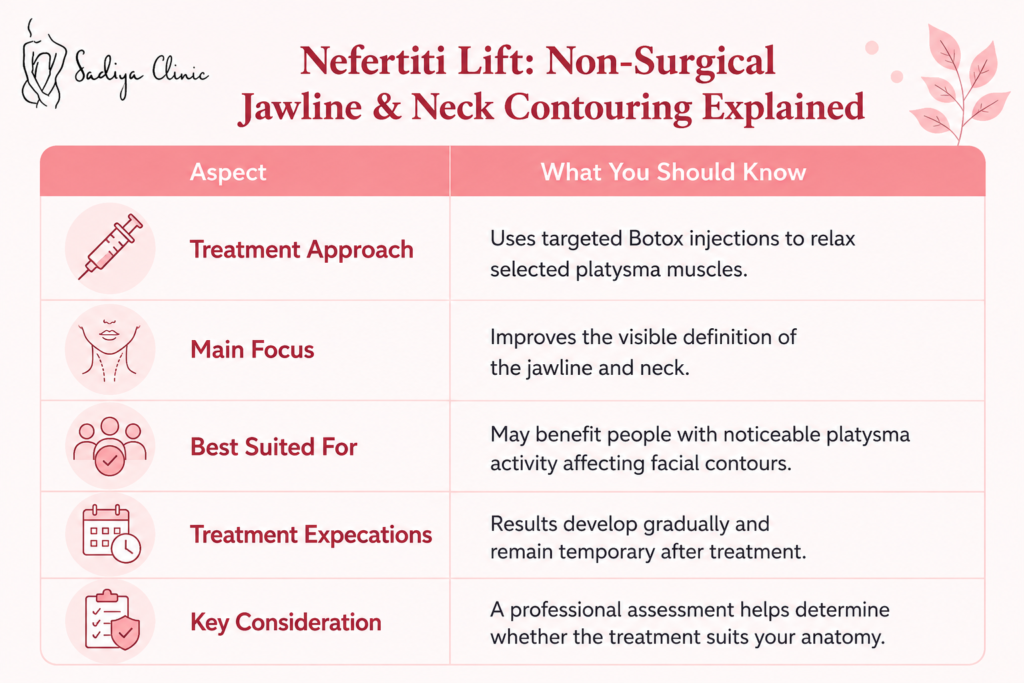
  • Slim the jawline by relaxing strong jaw muscles.
  • Reduce visible neck bands.
  • Treat excessive sweating in approved areas.
  • Help manage chronic migraines under medical care.

Botox can be a good choice if you want to improve your appearance without surgery. Learning about its different uses helps you understand what to expect before treatment. It also allows you to make an informed decision and choose the option that best matches your needs and lifestyle.

How Long Does It Take for Botox to Work and Last?

Most people start to notice Botox results within three to five days after treatment. However, the full effect usually appears within 10 to 14 days. In most cases, the results last three to four months. The treatment area, your muscle movement, and your body’s response can affect how long the results last.

A systematic literature review published in the Journal of Clinical and Aesthetic Dermatology [2], found that Botox often starts working within a few days, and many people see full results within two weeks. The review also reported that the effects usually last around three to four months, although the exact duration varies from person to person.

What Are the Different Types of Botox?

Yes, there are different types of Botox available for cosmetic treatments. The most common options are Botox Cosmetic, Dysport, Xeomin, and Jeuveau. Although they work in a similar way, each product has different features. Your provider will choose the one that best suits your needs and treatment goals.

The right option depends on the treatment area, your concerns, and the results you want to achieve. Some products may spread differently or have a slightly different onset of action. Your provider will explain these differences and recommend the most suitable option for you.

Botox injection sites explained with details

What Are the Long-Term Effects of Botox?

Botox is generally safe for long-term cosmetic use. Many people continue treatment for years without serious problems. However, it should always be performed by a qualified provider. Regular follow-up visits are also important. They help monitor your results and decide when you need your next treatment.

Results May Last Longer

Some people need Botox less often after regular treatments. This happens because the treated muscles may become less active over time. However, the results are different for everyone.

Muscles Can Become Weaker

Repeated Botox treatments can make the treated muscles weaker. This helps reduce facial lines. If you stop treatment, the muscles gradually return to their normal strength.

Side Effects Are Usually Mild

Most side effects are temporary. You may notice slight redness, swelling, or bruising around the injection site. These symptoms usually improve within a few days.

Regular Follow-Up Visits Matter

Regular check-ups help your provider review your results. They can also decide the best time for your next treatment. This helps you maintain consistent results over time.

A review published in Annals of Plastic Surgery [3], examined the long-term effects of repeated cosmetic Botox treatments. The researchers found that Botox has shown positive long-term results with a low rate of side effects. However, they also noted that more long-term studies are needed to better understand changes in muscle function after repeated treatments.

Achieve Natural Results with Expert Botox Treatment with Sadia Clinic

If facial lines or wrinkles make you look tired or older than you feel, you may be looking for a safe and effective solution. You also want results that enhance your appearance without changing your natural expressions. Choosing the right provider can help you feel confident about your decision.

At Sadiya Clinic, we create a Botox treatment plan that suits your face and your goals. Our experienced team carefully treats each area to help you achieve smooth and balanced results. Contact us today through our contact page or email us at

sadiya@sadiyaclinic.com to schedule your consultation and learn how we can help you achieve a smoother, more confident appearance.

FAQs

How do I know which Botox injection sites are right for me?

The right Botox injection sites depend on your face, muscle movement, and personal goals. During your consultation, your provider will assess your facial expressions and recommend the best treatment areas. This helps improve your appearance while keeping your facial expressions comfortable and balanced.

Can Botox treat more than one area during the same appointment?

Yes, Botox can treat more than one area during the same appointment if it suits your treatment plan. Your provider will assess your facial muscles, cosmetic goals, and health before deciding which areas to treat. This personalized approach helps create balanced, natural-looking results.

What should I avoid after Botox treatment?

After Botox treatment, avoid rubbing the treated area, strenuous exercise, and lying flat for several hours. These precautions help the product settle properly and reduce the risk of it spreading to nearby muscles. Your provider will also give you simple aftercare instructions to support the best possible results.

Will my face look frozen after Botox?

No, your face should not look frozen after Botox when an experienced provider performs the treatment. The right dose relaxes targeted muscles without limiting your natural facial expressions. A personalized treatment plan helps you achieve a refreshed appearance while still looking like yourself.

How often should I schedule Botox treatments?

Most people schedule Botox treatments every three to four months to maintain consistent results. However, your ideal timeline depends on your treatment area, muscle activity, and personal goals. During each follow-up visit, your provider will assess your results and recommend the best time for your next appointment.

References

  1. Sundaram, H., et al. (2016). Global Aesthetics Consensus: Botulinum toxin type A—Evidence-based review, emerging concepts, and consensus recommendations for aesthetic use, including updates on complications. Plastic and Reconstructive Surgery, 137(3), 518e–529e.
  1. Nestor, M. S., et al. (2021). Onset and duration of abobotulinumtoxinA for aesthetic use in the upper face: A systematic literature review. Journal of Clinical and Aesthetic Dermatology, 13(12 Suppl), E56–E67.
  1. Crook, J. L., et al. (2022). Long-term effects of repeated botulinum toxin injection in cosmetic therapeutics. Annals of Plastic Surgery, 88(4S), S323–S328.

botox, Facial Balancing, Wrinkles

Facial Balancing checkup and diagnosis with medical professional.

Facial balancing can improve the proportion and harmony of your appearance through care planned around your needs. Treatment may involve one or more areas, depending on the changes you want to achieve. Before making a decision, it helps to learn about available options, expected results, recovery time, possible side effects, and how long the effects may last.

If you want subtle improvements while still looking like yourself, careful planning matters. At Sadiya Clinic, your consultation focuses on what you would like to change and the options that may suit you. Schedule a consultation today to receive clear guidance and explore an approach designed to complement your natural appearance.

What Is Facial Balancing and How Does It Create Facial Harmony?

Facial balancing is a cosmetic approach that helps create better proportion between your features. Rather than changing one area without considering the rest of your face, it looks at how each part relates to the others. Depending on your needs, care may include fillers, Botox, or both to make subtle changes while keeping your appearance natural.

According to a 2025 clinical study available through the National Library of Medicine [1], treating the chin, smile lines, and lines around the mouth with hyaluronic acid fillers improved facial harmony and appearance. Patients also reported high satisfaction after treatment. The findings suggest that addressing related areas through a planned approach may support a more harmonious result.

Which Areas of the Face Can Be Treated for Better Balance?

Several parts of the face can be addressed to create better proportion between your features. Common areas include the cheeks, chin, jawline, lips, and temples. However, you may only need changes in one or two places. Your provider can examine how these areas relate to each other and suggest options that complement your natural appearance.

Depending on your needs, the following areas may be considered as part of your treatment:

  • Cheeks: Adding support or gentle contour can improve midface shape and create a smoother transition between nearby features.
  • Chin: Treatment can improve chin shape or projection, helping it sit in better proportion with the nose, lips, and jawline.
  • Jawline: Careful treatment can add definition to the lower face and create a clearer transition between the jaw and neck.
  • Lips: Subtle adjustments can improve shape, volume, or proportion while keeping the lips in harmony with surrounding features.
  • Temples: Restoring lost volume in this area can soften hollowing and create a smoother transition from the forehead to the cheeks.

The best approach depends on your anatomy, priorities, and desired outcome. You do not need to address every part of your face to see a noticeable difference. Often, careful changes in selected places can improve proportion without adding unnecessary volume. A detailed consultation can help identify where treatment may offer the most value.

What Should You Expect From Facial Balancing Before and After Treatment?

Before facial balancing, you will have a consultation to discuss your goals, health history, and any cosmetic procedures you have had in the past. Your provider will examine your features and explain the options that may suit you. After the procedure, you may notice mild swelling, redness, soreness, or bruising. These effects are usually temporary and improve with time.

When comparing facial balancing before and after results, remember that changes need time to settle. You may see an early difference soon after your appointment, while the final outcome can take longer to appear. Since everyone responds differently, follow the aftercare instructions you receive and attend recommended follow-up visits to review your progress and ask questions.

How Long Does Facial Balancing Last?

How long facial balancing lasts depends on the procedures included in your plan. Some effects may remain visible for several months, while others can last a year or longer. The timeline varies based on the product used, the area treated, facial movement, and how your body responds. As a result, maintenance needs are different for each person.

According to a 2025 study available on ScienceDirect [2], hyaluronic acid fillers used in the midface, chin, and jawline showed improvements through a 12-month follow-up period. Since fillers can be one part of a facial balancing approach, the research provides useful information about their duration. However, results may differ based on the procedure and individual response.

Everything you need to know about facial balancing.

How Can You Choose the Right Facial Balancing Treatment Plan?

Choosing a suitable facial balancing plan starts with understanding what you want to improve and why. Your provider should consider your needs before suggesting any procedure. Rather than choosing a treatment because it is popular, focus on changes that fit your appearance and preferences. A thoughtful plan should also explain the purpose of each option and set clear, practical expectations.

Share the Changes You Want to See

Explain what you would like to improve in simple terms. This gives your provider a clearer idea of your priorities and helps keep the discussion focused on changes that matter to you.

Understand the Reason for Each Option

Ask why a certain procedure or area has been suggested. A clear explanation can help you understand its purpose, possible outcome, and whether another option may be worth considering.

Learn About Side Effects and Aftercare

Before making a decision, ask about possible side effects and care instructions. Knowing these details in advance can help you prepare properly and manage the first few days more comfortably.

Choose Results That Suit Your Features

Photos can help you explain your preferences, but they should not become an exact target. Each person has unique features, so the final approach should complement your own appearance.

According to a 2024 expert article published by Dove Medical Press [3], good facial aesthetic care should include proper screening, assessment, aftercare, and follow-up. The experts also highlight the importance of understanding patient goals and discussing concerns before a procedure. Clear communication can help you understand your options and make informed decisions about your care.

Start Your Facial Balancing Consultation at Sadiya Clinic

You may feel that certain features look out of proportion, but you may not know which option is right for you. Choosing between fillers, Botox, and other procedures can feel confusing. You may also worry about looking overdone or making changes that do not suit your appearance. These concerns can make it harder to decide where to begin.

At Sadiya Clinic, your consultation starts with a clear discussion about what you would like to improve. Your provider can assess your facial proportions and explain suitable options in simple terms. Together, you can choose an approach that complements your features and preferences. Contact us today to schedule your consultation and explore the options available to you.

FAQs

Is facial balancing painful?

Facial balancing may cause mild discomfort, but the experience varies from person to person. You may feel a small pinch or pressure during injectable treatments. Providers may use numbing cream or other comfort measures when suitable. Any tenderness after treatment is usually temporary and depends on the areas treated.

How much downtime should I expect after facial balancing?

Downtime after facial balancing is usually short, but it depends on the treatments you receive. You may notice mild swelling, redness, tenderness, or bruising after injectable procedures. These effects often improve gradually. Your provider will explain what to expect and give you aftercare instructions based on your specific treatment plan.

Can facial balancing look natural and subtle?

Yes, facial balancing can create subtle results when the approach suits your features and goals. The aim is to improve harmony rather than change how you look. Careful adjustments to selected areas can improve proportion while keeping your expressions and individual characteristics. The final outcome depends on the procedures included and how your body responds.

Is there a right age to consider facial balancing?

There is no perfect age for facial balancing. The right time depends on your facial features, concerns, and personal goals. Some people want to improve facial balance, while others notice changes as they get older. A consultation can help you understand whether the treatment is suitable for you and your desired results.

Can facial balancing be done in one appointment?

Yes, facial balancing can sometimes be completed in one appointment, depending on your goals and recommended procedures. However, some people may benefit from a gradual approach over several visits. This allows the provider to review changes carefully, make minor adjustments when needed, and avoid doing more than necessary during a single appointment.

References 

  1. Dayan, S. H., Hartman, C. L., Di Gregorio, C., Avelar, L., Haddad, A., Andriopoulos, B., & Bromée, T. (2025). Aesthetic improvement, facial harmony, and patient satisfaction after lower face treatment with a hyaluronic acid filler: A randomized post-marketing study to evaluate two different stepwise injection approaches. The Journal of Clinical and Aesthetic Dermatology, 18(10), 48–54.
  1. Swaminathan, V. (2025). Effectiveness, safety, and versatility of hyaluronic acid dermal filler. JPRAS Open, 45, 410–418.
  1. Philipp-Dormston, W. G., De Boulle, K., Gronovich, Y., Lowe, N., Sayed, K., Sykianakis, D., & Tuncer, S. (2024). The patient journey in facial aesthetics: Findings from a European consensus meeting on improving the quality of life for patients receiving botulinum toxin injections. Clinical, Cosmetic and Investigational Dermatology, 17, 329–337.

Facial Balancing

Lip Fillers

Lip filler is a simple, non-surgical treatment that adds volume, improves lip shape, and enhances natural definition. Most lip fillers contain hyaluronic acid, a naturally occurring substance that helps retain moisture and create soft, natural-looking results. If you want fuller lips or better symmetry, lip filler offers a safe and effective way to achieve natural-looking results with little downtime.

If you have been thinking about enhancing your lips but are unsure where to start, you are not alone. At Sadiya Clinic, we take the time to understand your goals and create a personalized treatment plan that complements your facial features. Schedule a consultation today and discover how expertly performed lip filler treatments can enhance your confidence and appearance.

Lip Filler Results

How Does Lip Filler Work to Enhance Your Lips?

Lip filler works by adding volume beneath the skin to improve the shape, definition, and fullness of your lips. Most lip fillers used today contain hyaluronic acid, a naturally occurring substance that attracts moisture and creates soft, natural-looking volume. During treatment, your provider carefully places the filler into targeted areas to enhance your lips while maintaining facial balance.

According to a review published in the Journal of Cutaneous and Aesthetic Surgery [1], hyaluronic acid is the preferred filler for lip augmentation because it delivers soft, natural-looking results and has a strong safety record. The authors also note that your outcome depends not only on the filler but also on the provider’s skill, experience, and injection technique.

What Are the Benefits of Lip Fillers?

Lip filler offers a simple way to enhance the shape, volume, and definition of your lips without surgery. Whether you want a subtle change or a fuller appearance, the treatment can be tailored to your goals. It also helps improve lip symmetry and restore volume that naturally decreases with age, giving your lips a balanced, refreshed look.

Benefits of lip filler include:

  • Enhances Lip Volume: Adds fullness to naturally thin lips or restores volume lost with age.
  • Improves Lip Symmetry: Balances uneven lips for a more harmonious appearance.
  • Defines the Lip Border: Creates a sharper cupid’s bow and more defined lip edges.
  • Creates Subtle Lip Filler Results: Delivers natural-looking enhancement without an overfilled look.
  • Smooths Fine Lines: Softens vertical lines around the mouth for a younger appearance.
  • Offers Customizable Treatment: Your provider adjusts the amount of filler based on your goals.
  • Requires Minimal Downtime: Most people return to normal activities within a day.

One of the biggest advantages of lip filler is that the treatment is highly personalized. Your provider can make small, gradual adjustments to achieve results that suit your facial features and preferences. With proper treatment and lip filler aftercare, you can enjoy natural-looking lips that enhance your appearance while preserving your unique beauty.

What Happens During a Lip Filler Procedure and How Long Does Lip Filler Last?

A lip filler procedure begins with a consultation to discuss your goals and assess your lip shape. Your provider then applies a numbing cream before performing a filler lip injection in carefully selected areas. The treatment usually takes 30 to 45 minutes. Lip filler typically lasts 6 to 12 months, although results vary depending on the filler type, your metabolism, and lifestyle.

According to Cleveland Clinic [2], most lip filler treatments take less than an hour and provide immediate results, although mild swelling may temporarily affect your appearance. Hyaluronic acid fillers generally last 6 to 12 months, depending on the product used and your body’s metabolism. Follow-up treatments can help maintain your desired lip shape, volume, and definition over time.

What is Lip Filler? Benefits, procedure, results and recovery explained

What Should You Know About Lip Filler Aftercare for the Best Results?

Lip filler aftercare plays an important role in helping your lips heal properly and achieve the best possible results. Following your provider’s instructions can reduce swelling, minimize bruising, and lower the risk of complications. Simple steps, such as avoiding excessive heat, strenuous exercise, and unnecessary pressure on your lips, can support a smoother recovery and help your results last longer.

Follow Proper Lip Filler Aftercare

Follow all aftercare instructions provided by your practitioner. Avoid touching or massaging your lips unless advised otherwise. Proper lip filler aftercare supports healing, reduces discomfort, and helps the filler settle evenly for smooth, natural-looking results.

Avoid Activities That Increase Swelling

Avoid strenuous exercise, alcohol, smoking, hot showers, saunas, and prolonged sun exposure for the first 24 to 48 hours. These activities can increase swelling and bruising, which may delay your recovery after a filler lip injection.

Reduce Swelling and Support Healing

Use a cold compress for short intervals during the first day to minimize swelling. Stay hydrated, avoid salty foods, and sleep with your head elevated. These simple post lip filler care steps can make your recovery more comfortable.

Know When to Expect Final Results

You will notice fuller lips immediately after treatment. However, mild swelling may temporarily affect your appearance. Most lip fillers before and after results become visible within one to two weeks, once the filler settles and your lips heal completely.

Understanding Lip Filler Training and Choosing the Right Provider

While you may come across lip filler training in Vienna VA and other professional training programs, these courses are intended for licensed healthcare professionals. As a patient, your priority should be choosing a qualified and experienced provider who performs lip filler treatments safely and focuses on achieving natural, balanced results.

According to Healthline [3], keeping your lips clean, staying hydrated, and avoiding activities that increase blood flow during the first 24 to 48 hours can support a smoother recovery. The article also recommends delaying lipstick application and limiting sun exposure until your lips have healed, helping you achieve the best possible treatment outcome.

Lip Filler Before and After Results

Enhance Your Lips with Natural-Looking Lip Filler Today with Sadiya Clinic 

If you have been thinking about enhancing your lips but worry about looking overfilled or unnatural, you are not alone. Many people want fuller, well-defined lips that still look like their own. With the right treatment and an experienced provider, you can achieve subtle, balanced results that complement your natural features.

At Sadiya Clinic, we take the time to understand your goals before recommending a personalized lip filler treatment plan. Our experienced team focuses on enhancing your natural beauty while prioritizing your comfort and safety throughout the process. Contact us today and let us help you achieve beautiful, natural-looking lips with confidence.

FAQs

How long does lip filler last?

Lip filler typically lasts 6 to 12 months. However, the exact duration depends on the type of filler, your metabolism, lifestyle, and the treatment area. Regular touch-up appointments can help maintain your desired lip shape and volume while keeping your results natural and consistent.

Is a filler lip injection painful?

A filler lip injection usually causes only mild discomfort. Most providers apply a topical numbing cream before treatment, and many fillers also contain lidocaine to improve comfort. You may feel slight pressure or a brief pinch during the injections, but the procedure is generally well tolerated by most patients.

What should I include in my post lip filler care routine?

Proper post lip filler care includes avoiding strenuous exercise, alcohol, smoking, excessive heat, and unnecessary pressure on your lips for the first 24 to 48 hours. Applying a cold compress, staying hydrated, and following your provider’s instructions can reduce swelling, support healing, and help you achieve the best possible results.

How do I choose the best lip filler?

The best lip filler depends on your facial anatomy, lip shape, and cosmetic goals. During your consultation, your provider will recommend a suitable hyaluronic acid filler based on whether you want subtle enhancement, improved definition, or increased volume. A personalized treatment plan always delivers the most natural-looking outcome.

Can you get lip filler while pregnant?

Healthcare professionals generally advise against getting lip filler while pregnant or breastfeeding. Although hyaluronic acid fillers are considered safe for most adults, there is not enough research to confirm their safety during pregnancy. Waiting until after pregnancy and breastfeeding is the safest option for both you and your baby.

References

  1. Luthra, A. (2015). Shaping lips with fillers. Journal of Cutaneous and Aesthetic Surgery, 8(3), 139–142.
  1. Cleveland Clinic. (n.d.). Lip fillers: What they are, types, benefits, risks & side effects.
  1. Gallagher, G. (2025, July 9). 10 best aftercare tips for lip fillers. Healthline.

Aesthetician, botox, Facial Rejuvenation, Jawline Slimming, Wrinkles