Bioidentical hormone replacement therapy uses hormones that closely match those naturally produced by your body. Providers may consider it when hormone changes cause certain symptoms. Treatment can involve estrogen, progesterone, or testosterone. However, your needs vary based on your health, symptoms, and medical history. A qualified provider can help determine suitable options for your situation.
Hormone-related changes can affect your daily comfort, energy, sleep, and overall quality of life. At Sadiya Clinic, personalized care helps you understand which hormone treatment options are suitable for you. You can discuss your concerns, health history, and treatment goals with a qualified provider. Our concierge services offer a convenient and individualized care experience. Schedule a consultation today and take the next step toward informed hormone care.
Which Hormones Does Bioidentical Hormone Replacement Therapy Replace?
Hormones used in BHRT can include estrogen, progesterone, and testosterone. Estrogen may support women experiencing menopause-related changes. Progesterone can accompany estrogen for some women with a uterus. Testosterone may be considered for certain men with confirmed low levels. The specific hormone depends on your symptoms, health history, and treatment needs.
Research from the Endocrine Society [1] identifies estrogen, progesterone, and testosterone among hormones used in bioidentical preparations. However, compounded products can vary in strength and quality. Therefore, treatment should follow professional guidance. The organization also notes limited evidence supporting compounded formulations. FDA-approved options may offer more consistent quality, safety, and dosing when appropriate.
What BHRT Benefits May Men and Women Experience?
BHRT may help relieve certain symptoms linked to hormone changes. Women may experience relief from hot flashes, night sweats, and vaginal discomfort. Men may see improvements in symptoms linked to confirmed low testosterone. However, outcomes vary between individuals. Treatment should match your symptoms, health status, and medical needs. A qualified provider can guide appropriate care.
The potential effects can differ based on your hormone levels and treatment goals. Key areas may include:
- Menopause symptom relief: Treatment may reduce hot flashes and night sweats.
- Vaginal comfort: Certain hormone options may ease dryness and related discomfort.
- Sexual health: Addressing hormone changes may support sexual function in suitable patients.
- Mood and sleep: Some people may notice improvements when hormone-related symptoms affect rest or emotional health.
- Testosterone-related symptoms: Eligible men may experience improvements in symptoms associated with low testosterone.
Potential outcomes depend on the treatment used and your individual health needs. BHRT does not provide the same results for everyone. Your provider should review your symptoms and medical history before treatment. Regular follow-ups can help assess your response. They also allow timely adjustments when needed. This supports safer, personalized hormone care over time.
How Does Hormone Therapy for Women Differ From Testosterone Therapy for Men?
Hormone therapy for women and testosterone therapy for men address different hormonal needs and treatment goals. Women may use estrogen, with progesterone in certain cases. Men may receive testosterone for confirmed deficiency. The right approach depends on symptoms, hormone levels, medical history, and individual needs. Therefore, treatment should follow professional evaluation.
Research from The Menopause Society [2] supports hormone therapy for suitable women with bothersome menopause symptoms. Estrogen can help manage several common concerns. Meanwhile, testosterone treatment follows different criteria for men. The Endocrine Society recommends it for men with symptoms and consistently low testosterone levels. Therefore, medical assessment remains important before choosing either approach.
Who May Be a Candidate for Bioidentical Hormone Replacement Therapy?
People with hormone-related symptoms may be candidates for bioidentical hormone replacement therapy. However, symptoms alone do not confirm a hormone imbalance. Your provider should review your health history, concerns, and relevant test results. Treatment also depends on age, existing conditions, medications, and individual risks. Therefore, a professional assessment should precede any hormone treatment.
Menopause [3] reported findings from 29 randomized trials involving 1,808 perimenopausal and postmenopausal women. The review assessed the safety and effectiveness of compounded bioidentical hormone therapy. However, evidence remained limited for long-term outcomes. Therefore, treatment decisions should consider symptoms, medical history, and individual risks. Professional guidance remains important before starting hormone therapy.
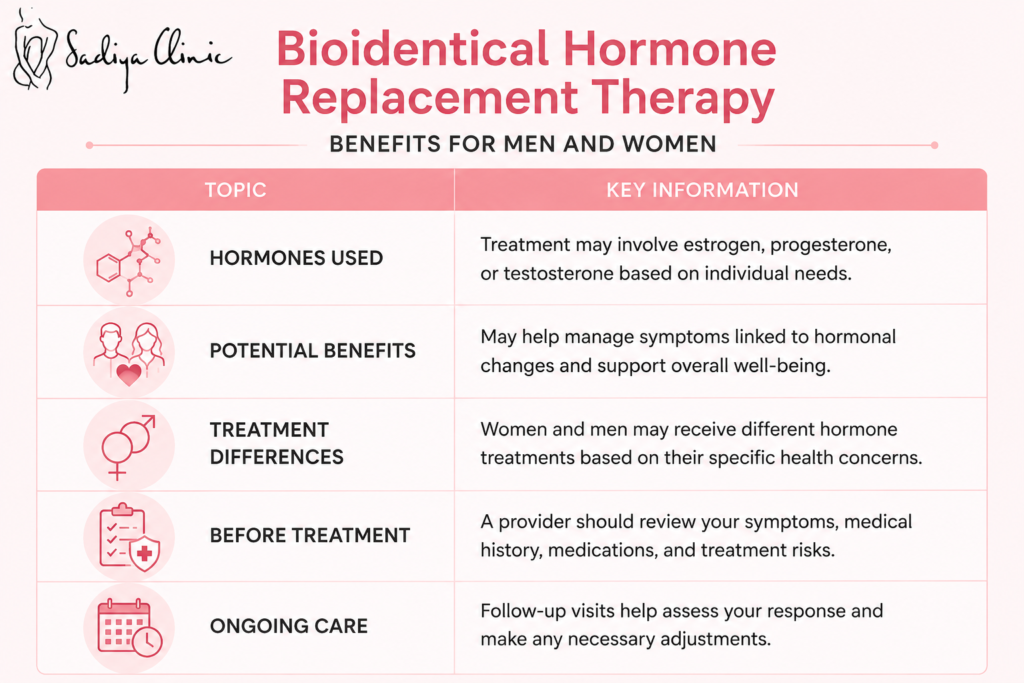
What Should You Know Before Starting Bioidentical Hormone Replacement Therapy?
Before starting bioidentical hormone replacement therapy, understand the treatment type, possible risks, expected results, and monitoring needs. Your provider should review your symptoms and medical history first. Also, discuss whether an FDA-approved or compounded option suits your situation. This preparation helps you make informed decisions and understand your care plan.
- Review Your Medical History Before Treatment
Your medical history can influence treatment choices. Share existing conditions, previous treatments, medications, and family history. This information helps your provider identify possible concerns and choose suitable options for your needs.
- Understand Compounded and FDA-Approved Options
Compounded products may differ in strength, purity, and consistency. Ask why a custom preparation is needed. Also, discuss FDA-approved alternatives with your provider before making your treatment decision.
- Set Realistic Expectations About Results
Results vary between individuals and depend on several factors. Discuss expected changes, possible timelines, and treatment goals beforehand. Clear expectations help you understand your progress and avoid unrealistic assumptions.
- Plan Regular Follow-Up Visits
Follow-up appointments help your provider assess your response and review any concerns. They can adjust treatment when needed. Regular monitoring also supports safer care and helps address changing health needs.
According to Obstet Gynecol. [4], compounded bioidentical hormone therapy has limited evidence for safety and effectiveness. FDA-approved options have stronger clinical support. Therefore, discuss available choices with a qualified provider. Consider product quality, possible risks, and treatment goals before starting therapy. This approach can help you make informed treatment decisions.
Begin Your Personalized BHRT Consultation at Sadiya Clinic Today!
Hormone changes can affect your energy, sleep, mood, and daily comfort. You may feel unsure about the right treatment. You may also struggle to understand your symptoms. Finding clear guidance can feel difficult. Every person has different needs. You deserve care that considers your health, concerns, symptoms, and treatment goals.
At Sadiya Clinic, you can discuss your hormone-related concerns during a personalized consultation with a qualified provider. Your provider can review your symptoms, health history, and treatment goals. You can also learn about suitable options, expected outcomes, follow-up needs, potential risks, and costs before making an informed decision about your care. Contact us today and take the next step toward personalized hormone care. Reach us at sadiya@sadiyaclinic.com and discuss your treatment options.
FAQs
How long does bioidentical hormone replacement therapy take to work?
Results can vary from person to person. Some people notice changes within a few weeks. Others may need several months. The timing depends on your symptoms, hormone levels, treatment type, and individual response. Regular follow-ups help your provider assess progress and adjust your treatment when needed.
Can BHRT help with weight loss?
No, BHRT does not directly cause weight loss. However, addressing certain hormone changes may support healthier weight management. Your results depend on several factors, including diet, activity, sleep, and other health conditions. A healthcare provider can identify possible causes of weight changes and recommend suitable options based on your needs.
Does hormone therapy help with low libido?
Bioidentical hormone replacement therapy may help low libido in some people. Hormonal changes can affect sexual desire. However, other factors may also play a role. Stress, sleep problems, medications, and relationships can influence libido. A healthcare provider can assess possible causes. They can then recommend an appropriate treatment based on your needs.
Can you stop BHRT once your symptoms improve?
You should not stop BHRT without speaking with your healthcare provider first. Your symptoms may improve, but stopping treatment can cause changes. Therefore, your provider should review your progress before making adjustments. They may recommend continuing, reducing, or stopping therapy based on your symptoms, health history, and treatment goals.
How much does BHRT cost?
The price varies based on your treatment plan, prescribed hormones, tests, and follow-up visits. Some clinics charge separately for consultations and laboratory work. Therefore, expenses can differ between providers and locations. Ask your clinic for a clear breakdown before starting. This helps you understand expected payments and avoid unexpected charges.
References
- Santoro, N., Braunstein, G. D., Butts, C. L., Martin, K. A., McDermott, M., & Pinkerton, J. V. (2016). Compounded bioidentical hormones in endocrinology practice: An Endocrine Society scientific statement. The Journal of Clinical Endocrinology & Metabolism, 101(4), 1318–1343.
- The Menopause Society. (n.d.). Hormone therapy.
- Liu, Y., Yuan, Y., Day, A. J., Zhang, W., John, P., Ng, D. J., & Banov, D. (2022). Safety and efficacy of compounded bioidentical hormone therapy (cBHT) in perimenopausal and postmenopausal women: A systematic review and meta-analysis of randomized controlled trials. Menopause, 29(4), 465–482.
- The American College of Obstetricians and Gynecologists. (2023). Compounded bioidentical menopausal hormone therapy: Clinical consensus No. 6. Obstetrics & Gynecology, 142(5), 1266–1273.