RF microneedling adds radiofrequency energy to traditional needle stimulation, making it different from regular microneedling. Both methods encourage collagen production and support smoother skin. However, RF treatment delivers controlled heat into deeper tissue. This added energy may support firmness, acne scars, enlarged pores, and uneven texture. Therefore, your skin concerns can help determine the better option.
Choosing the right treatment depends on your skin concerns and desired results. At Sadiya Clinic, we can assess your skin and explain suitable options. Our concierge services also provide convenient aesthetic care for eligible clients within the service area. This option can make treatment more convenient when traveling to the clinic is difficult. Schedule a consultation today to learn more about available services and treatment options.
How Does RF Microneedling Work Compared With Regular Microneedling?
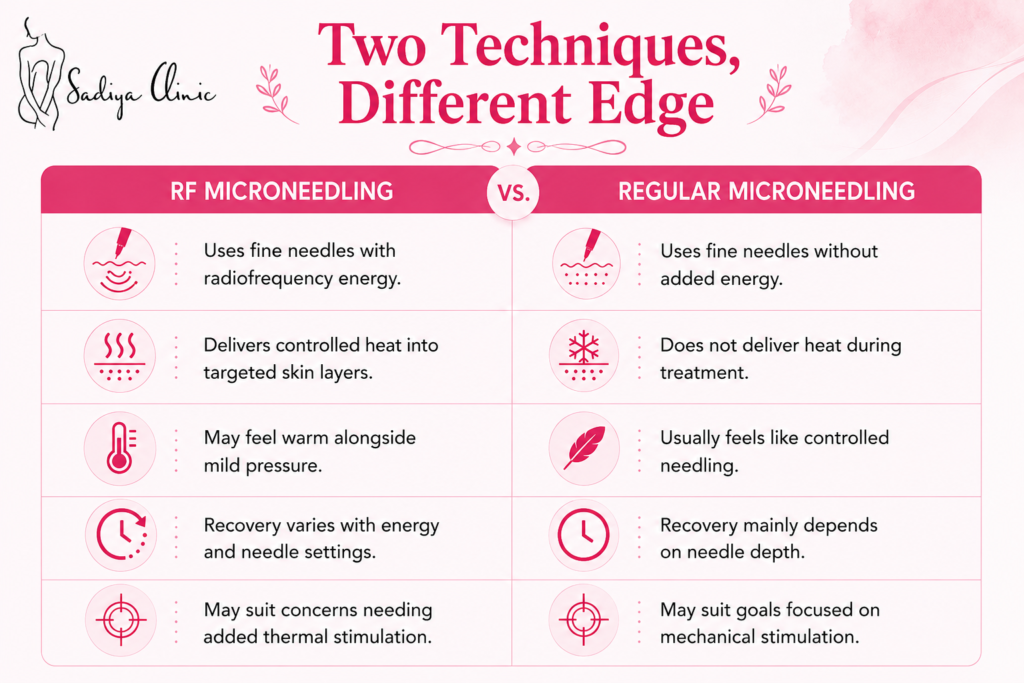
RF microneedling combines fine needles with controlled radiofrequency energy. Traditional microneedling relies on needle punctures alone. Both approaches create tiny, controlled injuries that activate the skin’s natural repair response. However, added heat reaches selected tissue layers during RF treatment. This process can encourage collagen remodeling while allowing providers to adjust penetration depth according to your specific treatment goals.
Research also supports this difference. A 2025 study published in Scientific Reports [1], compared traditional microneedling with fractional radiofrequency treatment. Researchers found increased collagen and elastin levels after RF treatment. They also reported improvements in wrinkles, elasticity, and hydration. These findings suggest that added radiofrequency energy may influence deeper skin remodeling during treatment.
What Are the Main Differences Between RF Microneedling and Microneedling?
The main difference is the energy used during each procedure. Regular microneedling creates controlled skin punctures with fine needles. RF microneedling adds radiofrequency energy to this process. This heat reaches targeted layers beneath the surface. Therefore, the two methods can differ in treatment depth, sensation, recovery, and potential results. Your provider can help match the approach to your needs.
Here are the key differences you should know:
- Energy: Regular microneedling uses mechanical needle stimulation. RF microneedling combines needles with radiofrequency energy.
- Depth: RF devices can deliver controlled energy at selected depths beneath the skin.
- Skin concerns: Both options can improve texture and scars. RF treatment may also address mild laxity.
- Treatment settings: Providers can adjust needle depth and energy levels according to your treatment goals.
- Recovery: Downtime can vary based on treatment intensity, skin sensitivity, and the area treated.
Both procedures can support healthier-looking skin through controlled stimulation. However, they use different techniques to achieve their effects. Regular microneedling may suit specific texture concerns. RF microneedling offers an added energy component for selected needs. Your provider will consider your skin condition, goals, and tolerance before recommending the most appropriate treatment approach for you.
What Results Can You Expect From RF Microneedling?
RF microneedling results usually develop gradually over several weeks. You may notice smoother texture, firmer-looking skin, and softer acne scars. Fine lines and enlarged pores may also appear less noticeable. However, outcomes vary between individuals. Your skin condition, treatment settings, and number of sessions can influence visible changes and overall improvement.
A 2024 study in Lasers in Surgery and Medicine [2], evaluated 126 patients with atrophic acne scars. Researchers reviewed 590 treatment sessions. Moderate to significant improvement occurred in 73% of patients. Outcomes also improved with additional sessions. These findings show promising results for scar appearance, although individual responses can vary.
Which Skin Concerns Can RF Microneedling Address?
RF microneedling can address several concerns involving skin texture, firmness, and scarring. It may help improve acne scars, fine lines, enlarged pores, and mild skin laxity. Results vary based on your skin condition and treatment plan. Therefore, a professional assessment remains important before choosing this procedure for your specific concern.
Acne Scars
RF microneedling may soften atrophic acne scars and improve uneven texture. Controlled stimulation encourages collagen remodeling within targeted layers. Over time, this process can make depressed scars appear smoother and less noticeable.
Fine Lines
The procedure may reduce the appearance of fine lines through controlled collagen stimulation. As remodeling develops, treated areas can look smoother. However, improvement varies according to skin condition, age, treatment settings, and individual response.
Enlarged Pores
RF microneedling may make enlarged pores appear less noticeable by supporting collagen production around them. Gradual remodeling can create a smoother surface. Your provider can adjust treatment settings according to your skin needs.
Mild Skin Laxity
Radiofrequency energy reaches selected tissue layers and creates controlled heat. This process may support firmer-looking skin. It can suit people with mild laxity who also want to improve texture and overall skin appearance.
Uneven Skin Texture
The treatment can improve rough or uneven surfaces by triggering the skin’s natural repair response. Controlled punctures encourage remodeling. Consequently, treated areas may develop a smoother appearance as recovery progresses.
A 2026 systematic review published in Aesthetic Plastic Surgery examined radiofrequency microneedling across various skin concerns. Researchers reviewed 41 studies, including 15 randomized controlled trials. Findings showed improvements in acne scars, wrinkles, skin laxity, and dermal density. However, outcomes differed across devices, treatment settings, and conditions. Therefore, results can vary between patients and procedures.
Book Your RF Microneedling Consultation Today with Sadiya Clinic
You may feel frustrated by acne scars, uneven texture, enlarged pores, fine lines, or mild skin laxity. You might also feel unsure about which treatment suits your needs. Comparing different options can feel confusing, especially when you want natural-looking improvement without choosing the wrong approach. A professional assessment can help you understand your choices with greater confidence.
At Sadiya Clinic, your provider can assess your skin, understand your concerns, and recommend an appropriate treatment approach. You can learn how the procedure works, what results to expect, and how to prepare for your session. A personalized plan helps you make an informed decision based on your skin and individual goals. Contact us today to discuss your skin concerns and treatment options. Email us at sadiya@sadiyaclinic.com to learn more about suitable treatment options.
FAQs
Does RF microneedling hurt?
RF microneedling may cause mild discomfort, warmth, or pressure during treatment. Your provider may apply a numbing cream beforehand to improve comfort. Sensitivity can vary from person to person. Treatment settings can also affect how you feel. Your provider will adjust the approach based on your skin and comfort level.
How long does an RF microneedling appointment take?
An RF microneedling appointment usually takes 30 to 90 minutes. The exact time depends on the treatment area and preparation needed. Larger areas may require longer sessions. Your provider will explain the expected duration during your consultation. This also gives you time to discuss your concerns and treatment plan.
How much does RF microneedling cost?
The cost of RF microneedling varies based on the treatment area, clinic, device, and number of sessions. Your skin concerns can also affect pricing. During a consultation, your provider can assess your needs and recommend a suitable plan. You can then receive a clear estimate before starting treatment.
What should I avoid after treatment?
You should avoid excessive sun exposure, intense heat, strenuous exercise, and harsh skincare products immediately after treatment. Keep your skin clean and moisturized instead. Avoid touching or picking the treated area. Also, follow your provider’s aftercare guidance. These steps help reduce irritation while your skin settles and recovers naturally.
When can I restart my skincare routine?
You can usually restart your skincare routine once your skin has recovered and sensitivity has settled. Follow your provider’s specific advice. Start with gentle cleansers and moisturizers. Then gradually reintroduce active products. Avoid retinol and exfoliating acids until your skin feels comfortable. Always use sunscreen during daytime to protect healing skin.