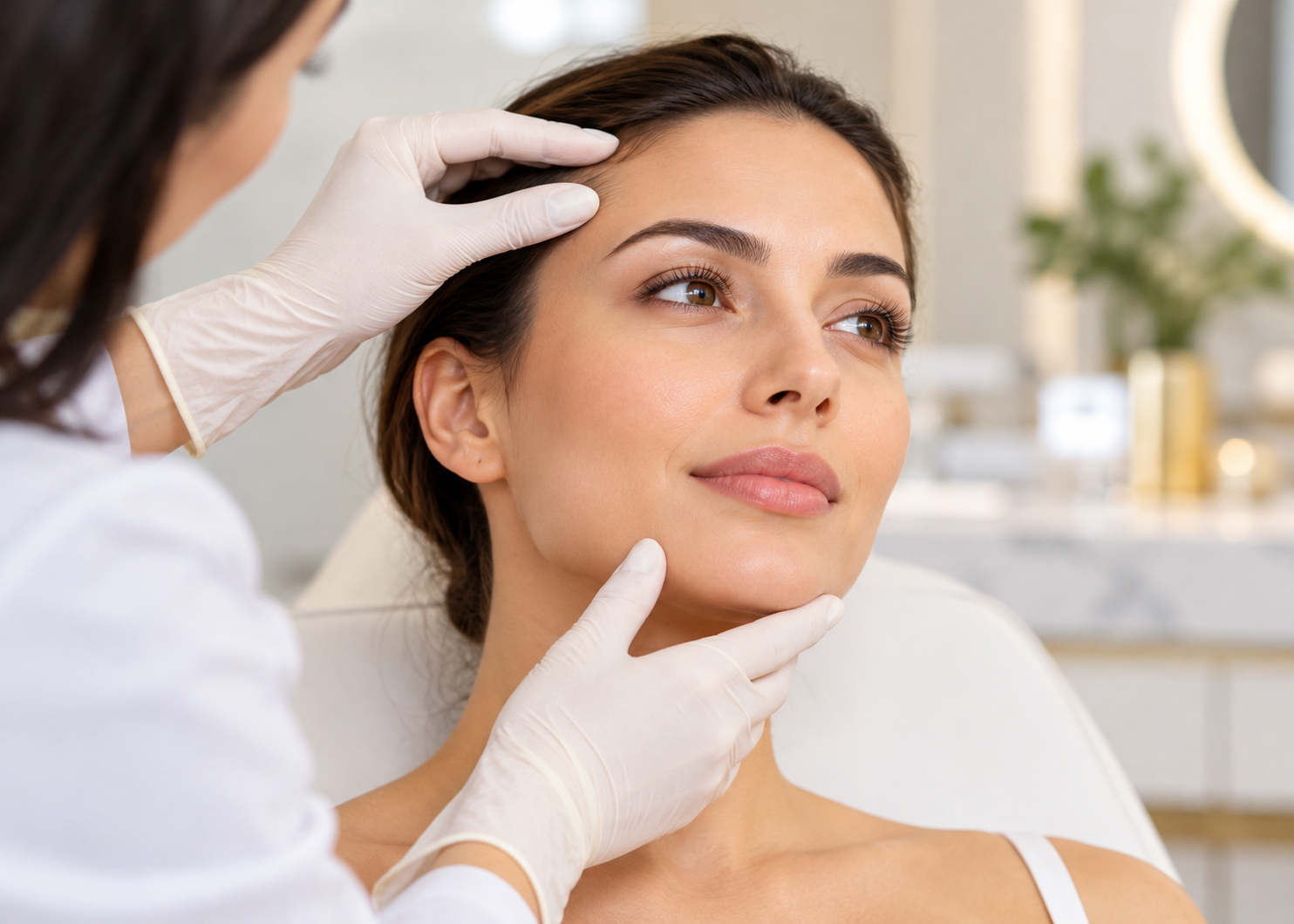
Preventative Botox is a cosmetic treatment that uses botulinum toxin to temporarily relax selected facial muscles. It helps reduce repeated movements that contribute to early expression lines. These include forehead wrinkles, frown lines, and crow’s feet. Treatment aims to soften existing fine lines and potentially delay deeper wrinkle formation over time.
Explore your treatment options and discover convenient care tailored to your needs. At Sadiya Clinic, you can discuss personalized Botox treatments and explore concierge services for added convenience. These services include Botox, Xeomin, and most fillers within 25 miles of the clinic. Minimum charges apply. Schedule a consultation today to learn more about available treatments and concierge care.
What Is the Best Age to Start Preventative Botox?
There is no fixed age to start preventative Botox because everyone develops facial lines differently. Some adults consider treatment in their late 20s or 30s. However, age alone should not determine suitability. Early expression lines, muscle activity, skin condition, and personal goals matter more. A qualified provider can assess these factors before recommending treatment.
A 2025 review published in Muscles [1], examined the preventive role of botulinum toxin in facial aging. It explored how early treatment may reduce repeated muscle contractions and delay dynamic wrinkle formation. However, the authors noted limited long-term evidence. Therefore, no specific starting age can be recommended for everyone.
Does Preventative Botox Really Work?
Yes, preventative Botox can help reduce repeated muscle movements that contribute to expression lines. It temporarily relaxes selected facial muscles, making forehead wrinkles, frown lines, and crow’s feet less noticeable. Early treatment may also help delay deeper wrinkle formation. However, results vary, and it cannot prevent every change associated with natural aging.
Several factors influence how well this treatment works:
- Muscle Activity: Frequent facial movements can contribute to developing expression lines over time.
- Treatment Timing: Addressing early dynamic wrinkles may help limit their progression.
- Injection Technique: Accurate placement supports balanced results and natural facial expressions.
- Individual Response: Muscle strength, skin condition, and treatment history influence outcomes.
Preventative Botox works best when treatment matches your facial anatomy and aesthetic goals. However, it does not eliminate wrinkles permanently or stop natural skin aging. Its effects gradually wear off, so maintenance sessions may be considered when appropriate. A qualified provider can assess your concerns and recommend whether this approach offers meaningful benefits.
What Are the Benefits of Preventative Botox?
Preventative Botox helps soften early wrinkles, reduce excessive muscle contractions, and maintain smoother skin. It can improve the appearance of developing expression lines. Additionally, targeted injections can support a refreshed appearance while maintaining balanced facial movement. This nonsurgical approach offers a way to manage early visible signs of aging.
A 2006 study published in Archives of Facial Plastic Surgery [2], examined Botox’s long-term effects on facial wrinkles. It compared identical twins with different treatment histories. The regularly treated twin showed fewer visible facial lines. These findings suggest potential benefits for maintaining smoother skin, although larger studies are needed for confirmation.
What to Expect During and After Treatment?
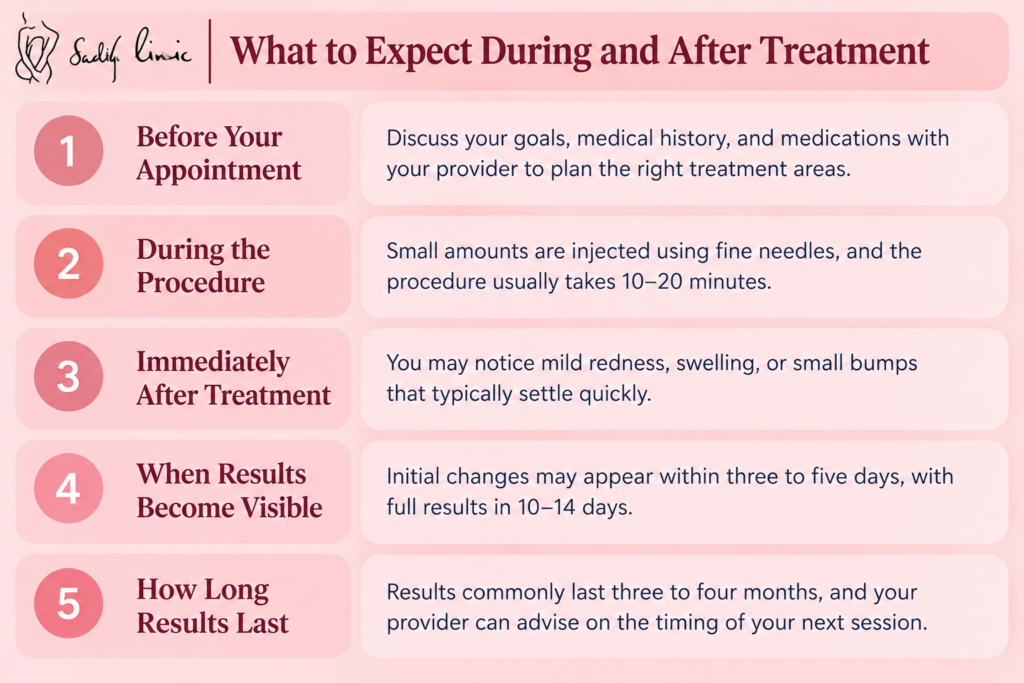
Preventative Botox usually involves a brief appointment, small injections, and minimal downtime. Your provider first examines your facial movements and identifies suitable treatment areas. Next, small amounts of botulinum toxin are administered using fine needles. The procedure typically takes 10–20 minutes. You can generally resume daily activities shortly afterward, following aftercare instructions.
Before Your Appointment
Discuss your aesthetic goals, medical history, medications, and previous cosmetic treatments. Your provider will assess facial muscle activity and explain suitable injection areas. This helps establish realistic expectations before treatment begins.
During the Procedure
The injector cleans the selected areas and administers small doses using fine needles. You may experience brief discomfort or a mild pinching sensation. Most appointments require no anesthesia.
Immediately After Treatment
You may notice small bumps, redness, tenderness, or mild swelling around injection sites. These effects usually settle quickly. Avoid rubbing or massaging treated areas, and follow your provider’s specific instructions.
When Results Become Visible
Initial changes may appear within three to five days. However, the full effect generally develops within 10–14 days. Your facial appearance should look gradually smoother rather than suddenly different.
How Long Results Last
Results commonly last three to four months, although individual responses vary. Muscle activity gradually returns as the product wears off. Your provider can assess whether another session is appropriate.
A 2025 randomized clinical trial published in JAMA Dermatology [3], compared four botulinum toxin formulations in 143 adults. Researchers assessed treatment effects at days 3, 30, 90, and 180. All formulations improved frown lines through 90 days. However, onset and duration varied. These findings highlight the importance of individualized treatment expectations and follow-up.
Schedule Your Preventative Botox Consultation at Sadiya Clinic
Fine lines on your forehead and around your eyes can become more noticeable with repeated facial expressions. Early wrinkles may affect your confidence and make you consider cosmetic treatments. However, choosing the right approach can feel overwhelming when you are unsure about treatment timing, suitable options, or maintaining natural facial expressions.
At Sadiya Clinic, our team helps you understand suitable Botox options based on your facial features, concerns, and aesthetic goals. Whether you are considering baby Botox or preventative treatment, we focus on personalized care and natural-looking results. Contact us today at sadiya@sadiyaclinic.com to learn more about your options.
FAQs
How often do I need preventative Botox?
Preventative Botox typically requires repeat treatments every three to four months. However, the exact frequency depends on your facial muscle activity, treatment areas, and individual response. Some people may need fewer sessions to maintain their results. Your provider can recommend a suitable schedule based on your aesthetic goals.
Is baby Botox the same as preventative Botox?
No, baby Botox and preventative Botox are not exactly the same. Baby Botox uses smaller doses of botulinum toxin to create subtle results. In contrast, preventative Botox describes treatment aimed at managing early expression lines. However, baby Botox can also serve preventative purposes depending on individual needs.
Will preventative Botox make my face look frozen?
No, preventative Botox does not have to make your face look frozen. When administered correctly, it can soften expression lines while preserving natural facial movement. The key is appropriate dosing and precise injection placement. An experienced provider can tailor treatment to your facial anatomy and aesthetic goals.
Do wrinkles get worse if I stop Botox?
No, wrinkles do not become worse simply because you stop Botox. As the treatment wears off, facial muscles gradually regain their normal movement. Consequently, previously softened lines may reappear. However, your skin continues aging naturally, and existing wrinkles may deepen over time due to natural aging.
Where can I get preventative Botox in Vienna, VA?
You can find preventative Botox at qualified medical aesthetic clinics in Vienna, Virginia. Look for licensed providers with experience in facial anatomy and injectable treatments. Before booking, review their credentials, consultation process, and patient feedback. This helps you make an informed decision and choose a suitable practitioner.
About the Author
Dr. Aimen Arij, Pharm.D.
Dr. Aimen Arij, Pharm.D., is a licensed Clinical Pharmacist with over 6 years of experience in clinical and pharmaceutical practice. She has served as a Medical Science Liaison Executive for a multinational pharmaceutical company and has extensive experience working with international telepharmacy services. Her professional interests include medication safety, patient education, and translating clinical research into accessible, evidence-based health content.
Medically Reviewed By
Dr. Sadiya Naseem, DNP, FNP-BC
Dr. Sadiya Naseem, DNP, FNP-BC, is a board-certified Family Nurse Practitioner and the founder of Sadiya Clinic in Vienna, VA. She is a national injector trainer known for her ultrasound-guided approach to aesthetic treatments and her focus on safe, natural-looking results.
References
- Marinelli, G., Inchingolo, A. D., Trilli, I., Pezzolla, C., Sardano, R., Inchingolo, F., Palermo, A., Maspero, C. M. N., Dipalma, G., & Inchingolo, A. M. (2025). Proactive aesthetic strategies: Evaluating the preventive role of botulinum toxin in facial aging. Muscles, 4(3), 31.
- Binder, W. J. (2006). Long-term effects of botulinum toxin type A (Botox) on facial lines: A comparison in identical twins. Archives of Facial Plastic Surgery, 8(6), 426–431.
- Lemdani, M. S., Honig, S. E., Habarth-Morales, T. E., Davis, H. D., Niu, E. F., Ewing, J. N., Broach, R. B., Serletti, J. M., & Percec, I. (2025). Comparison of botulinum toxin A formulations for glabellar strain treatment in women: A double-blind randomized clinical trial. JAMA Dermatology, 161(7), 723–730.