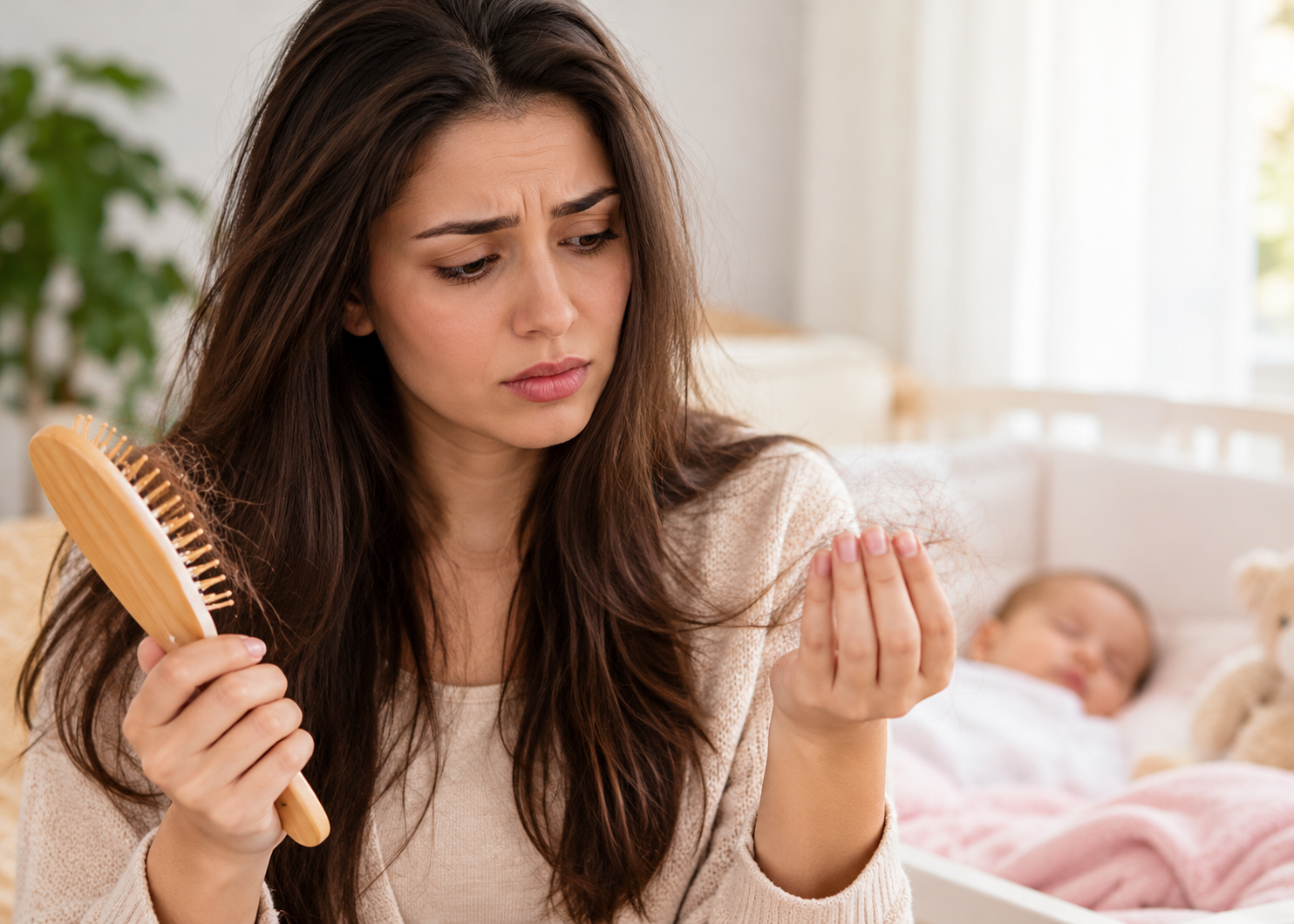
Postpartum hair loss is a common and usually temporary condition that occurs after childbirth. Hormonal changes trigger increased shedding, often within a few months of delivery. However, most women gradually regain their hair fullness as the growth cycle returns to normal. Proper care and balanced nutrition can support this recovery.
Postpartum hair loss can feel frustrating, but professional guidance can help you understand your options. At Sadiya Clinic, we offer support to help address your hair concerns and identify suitable care options. Schedule a consultation today to discuss your needs and receive personalized guidance. Explore our concierge services to learn more about available support and take the next step toward healthier hair.
What Causes Hair Shedding After Pregnancy?
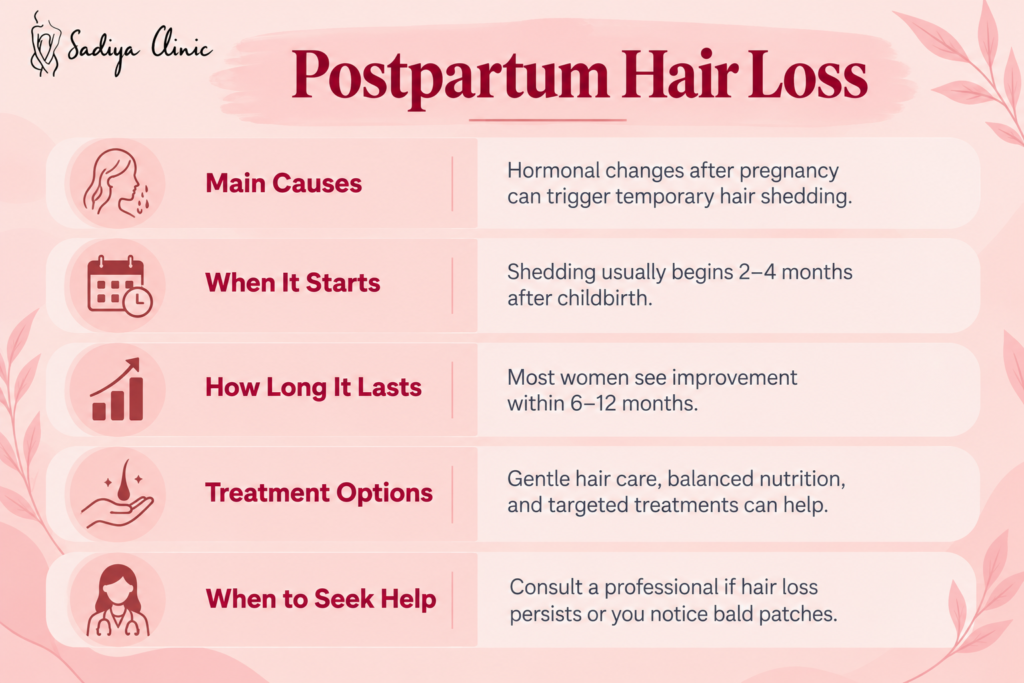
Hair shedding after pregnancy mainly occurs because estrogen levels drop following childbirth. During pregnancy, higher estrogen levels keep more hair follicles in the growth phase. After delivery, hormone levels change, causing more strands to enter the resting phase. These hairs eventually fall out together. This temporary process is called telogen effluvium and usually improves naturally over time.
A 2014 study published in the Journal of the European Academy of Dermatology and Venereology [1], examined hair growth changes during pregnancy and after childbirth. Researchers observed changes in the hair cycle during the postpartum period. These findings help explain why hormonal shifts trigger temporary shedding. As hormone levels stabilize, normal hair growth gradually resumes.
When Does Postpartum Hair Loss Stop?
Postpartum hair loss usually stops within six to twelve months after childbirth. Shedding often begins around two to four months after delivery and may peak around the fourth month. However, recovery varies from person to person. Hormone levels gradually stabilize, allowing the hair growth cycle to return to its usual pattern.
Several factors can influence your recovery timeline, including:
- Hormonal Changes: Your body needs time to adjust after delivery.
- Nutritional Health: Low iron levels or poor nutrition may affect hair growth.
- Hair Care Habits: Gentle styling helps prevent additional breakage.
- Underlying Conditions: Thyroid problems or other health concerns may delay recovery.
As your body adjusts, you should gradually notice less shedding and new hair growth. However, your hair may take several months to regain its previous fullness. If excessive shedding continues beyond your baby’s first birthday, consult a healthcare professional. Early assessment can identify other causes and help you explore suitable treatment options for lasting concerns.
How Can You Support Healthy Postpartum Hair Regrowth?
You can support healthy postpartum hair regrowth through balanced nutrition, gentle hair care, and enough rest. Include protein-rich foods, iron sources, fruits, and vegetables in your daily meals. Additionally, avoid tight hairstyles and excessive heat styling. Handle wet strands gently to reduce breakage. These simple habits protect your hair while its natural growth cycle recovers.
A 2017 review published in Dermatology Practical & Conceptual [2], examined the relationship between nutrition and hair loss. Researchers highlighted how iron, protein, and other nutrient deficiencies may affect hair health. Therefore, a balanced diet can support normal growth. However, supplements are most helpful when a deficiency exists and professional guidance recommends their use.
What Treatment Options Are Available for Postpartum Hair Loss?
Treatment options for postpartum hair loss include gentle hair care, balanced nutrition, and medical evaluation when needed. Most cases improve naturally as hormone levels stabilize. However, correcting confirmed nutrient deficiencies may support recovery. Avoid tight hairstyles and excessive heat to reduce breakage. Consult a healthcare professional before using hair growth products, especially while breastfeeding.
A 2024 study published in the Journal of Clinical and Aesthetic Dermatology [3], examined postpartum hair loss in women. Researchers found that temporary shedding may reveal other underlying hair disorders. These findings highlight the importance of proper diagnosis. Therefore, professional assessment can help identify the cause and guide suitable treatment for persistent thinning after childbirth.
When Should You Seek Professional Help for Hair Loss After Pregnancy?
You should seek professional help if hair loss after pregnancy continues beyond twelve months, worsens, or causes visible bald patches. Persistent shedding may indicate an underlying health condition. Early assessment helps identify the cause and guide suitable care. Additionally, symptoms such as fatigue, scalp irritation, or unusual thinning deserve medical attention rather than waiting for natural recovery.
Excessive or Prolonged Shedding
If you continue losing large amounts of hair beyond your baby’s first birthday, consult a dermatologist. Persistent shedding may indicate nutritional deficiencies, hormonal imbalances, or another condition requiring treatment.
Visible Bald Patches
Round bald spots or sudden areas of missing hair are not typical signs of postpartum shedding. A dermatologist can examine your scalp and check for conditions such as alopecia areata.
Widening Part or Receding Hairline
If your part becomes wider or your hairline continues thinning, seek professional advice. These changes may suggest female pattern hair loss or traction alopecia rather than temporary postpartum shedding.
Other Physical Symptoms
Fatigue, dizziness, or unusual weight changes alongside hair loss may indicate iron deficiency or thyroid problems. A healthcare professional can recommend suitable blood tests based on your symptoms.
Scalp Pain or Irritation
Persistent itching, redness, tenderness, or scaling requires medical assessment. These symptoms may indicate scalp inflammation or another condition that affects healthy hair growth and needs specific treatment.
A study published in the International Journal of Women’s Dermatology [4], examined factors linked to postpartum hair loss. Researchers explored shedding patterns and the timing of hair changes after childbirth. These findings help explain differences in recovery among women. However, persistent thinning or unusual bald patches may require professional assessment to identify other underlying conditions.
Support Your Hair Health with Guidance from Sadiya Clinic
Postpartum hair loss can leave you worried about thinning strands, a widening part, or a less full hairline. You may feel frustrated when shedding continues despite your efforts to care for your hair. Uncertainty about recovery can also affect your confidence. Understanding your hair changes can help you make informed decisions about your care.
At Sadiya Clinic, you can explore suitable care options for your hair concerns and receive personalized guidance. Our team can help you understand possible causes and discuss appropriate next steps. Contact us today to discuss your concerns, or email us at sadiya@sadiyaclinic.com for more information about our services.
FAQs
Can postpartum hair loss cause bald spots?
Yes, postpartum hair loss can make your scalp more visible, but distinct bald spots are not typical. Hormonal changes usually cause diffuse shedding across the scalp. Round patches or sudden hair loss may indicate another condition, such as alopecia areata. Consult a dermatologist for proper diagnosis and suitable treatment.
Does postpartum hair loss affect the hairline?
Yes, postpartum hair loss can make your hairline appear thinner, especially around the temples. Hormonal changes cause increased shedding across the scalp, including the front. New growth often appears as short, fine strands. However, persistent thinning or bald patches may indicate another condition requiring professional evaluation.
Can I take biotin for postpartum hair loss while breastfeeding?
Yes, biotin may be suitable while breastfeeding if your healthcare professional recommends it. However, supplements rarely improve hair growth without a deficiency. High doses can interfere with certain blood tests, including thyroid tests. Consult your doctor before taking biotin to ensure it suits your needs and breastfeeding routine.
Should I check my iron or thyroid levels if my hair is thinning after childbirth?
Yes, checking iron and thyroid levels may help if hair thinning persists after childbirth. Iron deficiency and thyroid disorders can contribute to excessive shedding. A healthcare professional may recommend blood tests based on your symptoms and medical history. Early evaluation helps identify underlying problems and guide appropriate treatment.
Can postpartum hair loss happen again after a second pregnancy?
Yes, postpartum hair loss can happen again after a second pregnancy. Each delivery triggers hormonal changes that affect the hair growth cycle. However, shedding may differ in severity and duration. Maintaining balanced nutrition, practicing gentle hair care, and allowing time for recovery can support healthier regrowth.
About the Author
Dr. Aimen Arij, Pharm.D.
Dr. Aimen Arij, Pharm.D., is a licensed Clinical Pharmacist with over 6 years of experience in clinical and pharmaceutical practice. She has served as a Medical Science Liaison Executive for a multinational pharmaceutical company and has extensive experience working with international telepharmacy services. Her professional interests include medication safety, patient education, and translating clinical research into accessible, evidence-based health content.
Medically Reviewed By
Dr. Sadiya Naseem, DNP, FNP-BC
Dr. Sadiya Naseem, DNP, FNP-BC, is a board-certified Family Nurse Practitioner and the founder of Sadiya Clinic in Vienna, VA. She is a national injector trainer known for her ultrasound-guided approach to aesthetic treatments and her focus on safe, natural-looking results.
References
- Gizlenti, S., & Ekmekci, T. R. (2014). The changes in the hair cycle during gestation and the post-partum period. Journal of the European Academy of Dermatology and Venereology, 28(7), 878–881.
- Guo, E. L., & Katta, R. (2017). Diet and hair loss: Effects of nutrient deficiency and supplement use. Dermatology Practical & Conceptual, 7(1), 1–10.
- Galal, S. A., El-Sayed, S. K., & Henidy, M. M. H. (2024). Postpartum telogen effluvium unmasking additional latent hair loss disorders. The Journal of Clinical and Aesthetic Dermatology, 17(5), 15–22.
- Hirose, A., Terauchi, M., Odai, T., Fudono, A., Tsurane, K., Sekiguchi, M., Iwata, M., & Anzai, T. (2024). Investigation of exacerbating factors for postpartum hair loss: A questionnaire-based cross-sectional study. International Journal of Women’s Dermatology, 10(1), e0084.
Hair Regrowth, Hair Shedding, Hairloss after pregnancy, Healthy Postpartum, Postpartum, Postpartum Hair Loss, Sadiya Clinic, VA