Under eye filler is a non-surgical treatment that can soften hollows beneath the eyes. It may create a smoother, fresher appearance by restoring lost volume. However, results depend on your facial structure, skin quality, and treatment technique. Understanding possible benefits and risks can help you decide whether this option suits your specific under-eye concerns.
Choosing the right treatment starts with understanding your unique under-eye concerns and desired results. At Sadiya Clinic, your facial features can be assessed before treatment. You can discuss suitable options, expected outcomes, and potential risks. Schedule a consultation today to explore personalized care for a refreshed, natural-looking appearance. You can also review the concierge services available at Sadiya Clinic.
What Results Can You Expect From Under Eye Filler?
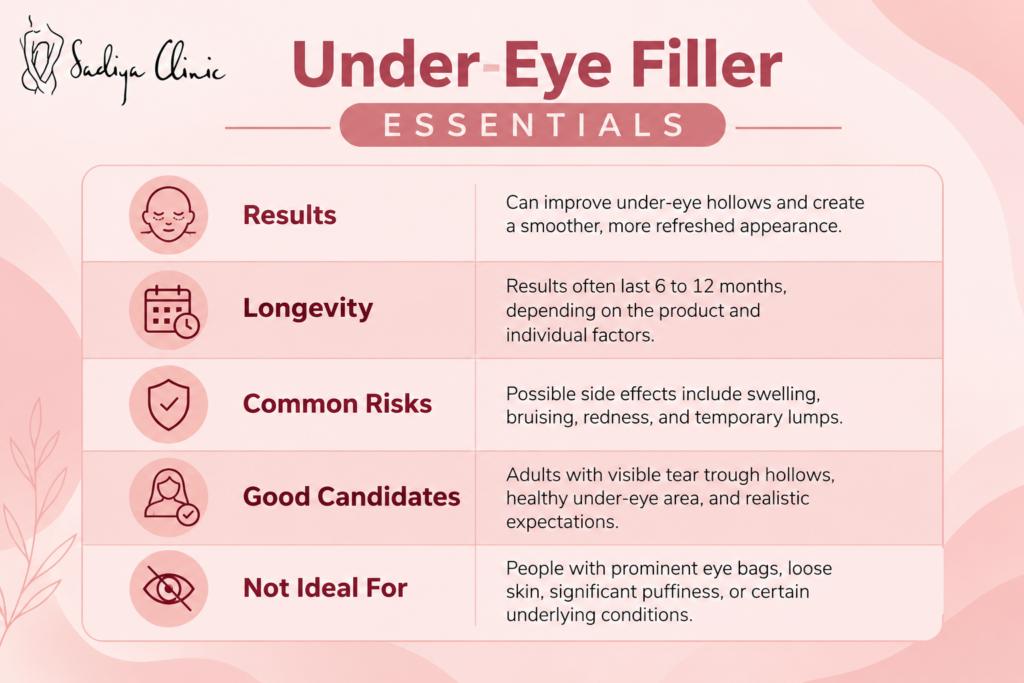
Under eye filler can soften hollows beneath the eyes and create a smoother lid-to-cheek transition. It may reduce shadows and make the area appear more refreshed. Results depend on facial anatomy, skin quality, filler type, and injection technique. Improvement may become clearer as initial swelling settles. However, filler does not correct every cause of dark circles.
A 2021 study published in the Aesthetic Surgery Journal [1], examined hyaluronic acid filler for moderate-to-severe under-eye hollows. Researchers found noticeable improvement among treated participants. At three months, 83.1% achieved at least one-grade improvement. Results remained measurable through 12 months. Therefore, the findings suggest that carefully administered filler can provide lasting correction for suitable patients.
What Are the Risks and Side Effects of Under Eye Filler?
Under eye filler can cause temporary swelling, bruising, redness, tenderness, or mild discomfort. These effects often improve as the treated area settles. However, complications can occur, especially when injections are placed incorrectly. Rare problems include lumps, persistent puffiness, skin discoloration, infection, or vascular blockage. Serious vascular complications may affect nearby tissues or vision.
Possible side effects include:
- Swelling: Puffiness may appear around the injection area.
- Bruising: Small blood vessels can cause temporary discoloration.
- Tenderness: Mild soreness may occur after treatment.
- Lumps: Uneven placement can create visible or noticeable areas.
- Persistent puffiness: Fluid retention may develop beneath the eyes.
- Discoloration: Superficial filler can sometimes create a blue-gray appearance.
- Infection: Although uncommon, bacteria can enter through injection sites.
- Vascular complications: Rare blockage can damage tissue or affect vision.
Most reactions are temporary and improve during recovery. Still, unusual pain, worsening swelling, skin color changes, or vision problems need prompt medical attention. Therefore, choosing an experienced qualified provider matters. A careful assessment can identify suitable candidates and reduce avoidable risks. Your provider should also explain aftercare steps and warning signs before treatment.
How Long Do Under Eye Filler Results Last?
Under eye filler results can last around 6 to 12 months, depending on the product and individual factors. Some patients may notice benefits for longer. Your metabolism, facial anatomy, filler type, injection technique, and treatment amount can affect longevity. Maintenance sessions may eventually help preserve the desired correction when the effect gradually decreases.
A 2024 study published in the Aesthetic Surgery Journal [2], evaluated the long-term performance of hyaluronic acid filler for under-eye hollows. Researchers followed 333 participants for 12 months. Results showed that many patients maintained visible improvement throughout this period. Therefore, the findings support lasting correction, although individual longevity can vary based on anatomy, product, and treatment technique.
Who Is a Good Candidate for Under Eye Filler?
A good candidate for under eye filler usually has visible tear trough hollows caused by volume loss. They should have healthy skin and realistic expectations. The treatment may suit adults seeking subtle improvement without surgery. However, prominent eye bags, loose skin, pigmentation, or swelling may require another approach. A professional assessment remains essential before treatment.
Noticeable Under-Eye Hollows
People with visible depressions beneath the eyes may benefit from added volume. Filler can soften the hollow and create a smoother transition between the lower eyelid and cheek.
Healthy Under-Eye Area
Your provider can assess skin quality, elasticity, swelling, and existing concerns. These factors help determine whether filler can produce a balanced result.
Realistic Expectations
Suitable patients understand that filler can improve contour but cannot solve every under-eye concern. Clear expectations help support natural-looking outcomes and appropriate treatment decisions.
Limited Under-Eye Bags
Filler may not suit people with prominent fat pockets or significant puffiness. These concerns can require different treatments, depending on their underlying cause.
Appropriate Facial Structure
Your tear trough, cheek shape, skin thickness, and surrounding tissues can affect treatment suitability. A professional assessment helps guide the treatment plan.
A 2017 study published in Dermatologic Surgery [3], examined hyaluronic acid filler for infraorbital hollowing. Researchers followed 80 patients for 12 months. The treatment produced significant improvement in under-eye appearance. Patient satisfaction also remained favorable during follow-up. These findings support filler use for suitable individuals with visible infraorbital hollows and appropriate treatment goals.
Book Your Under Eye Filler Consultation at Sadiya Clinic
If tired-looking eyes, under-eye hollows, or persistent shadows affect your appearance, you may feel frustrated with your reflection. Makeup may only provide temporary coverage, while skincare may not address structural hollows. You may also feel unsure whether filler is suitable for your features or worry about achieving natural-looking results.
At Sadiya Clinic, you can discuss your concerns with a qualified professional and explore suitable treatment options. Your under-eye area can be assessed based on your facial structure, skin, and desired outcome. Contact us today to take the next step toward a refreshed appearance. Email sadiya@sadiyaclinic.com to get started.
FAQs
How much does under eye filler cost?
Under eye filler cost varies based on the filler type, amount required, clinic, and practitioner’s expertise. Your treatment needs also affect the final price. A consultation provides a more accurate estimate after assessing your under-eye area. Therefore, avoid choosing treatment based only on price, as experience and product quality also matter.
How long does under eye filler take?
Under eye filler usually takes around 30 to 60 minutes, including consultation and preparation. The injection itself may take only a short time. However, the exact duration depends on your treatment plan, facial anatomy, and whether both sides need correction. Your provider can give a more accurate timeframe during consultation.
Can I wear makeup after under eye filler?
Yes, you can usually wear makeup after under eye filler, but waiting briefly is often recommended. Avoid applying pressure around the treated area immediately afterward. When using makeup, choose clean products and apply them gently. Follow your provider’s specific advice, especially if you have swelling, bruising, redness, or tenderness after treatment.
What should I avoid after under eye filler?
After under eye filler, avoid rubbing, pressing, or massaging the treated area. Also, limit strenuous exercise, alcohol, excessive heat, and prolonged sun exposure immediately afterward. Sleep with your head slightly elevated, if advised. Follow your provider’s instructions carefully, as recovery needs vary. Contact your injector if unusual swelling or pain develops.
Can under eye filler be dissolved?
Yes, hyaluronic acid under eye filler can usually be dissolved with hyaluronidase when medically appropriate. This enzyme breaks down the filler gradually. However, treatment should only be performed by a qualified medical professional. They will assess swelling, lumps, asymmetry, or other concerns before deciding whether dissolving treatment is necessary and appropriate.
References
- Fabi, S., Zoumalan, C., Fagien, S., Yoelin, S., Sartor, M., & Chawla, S. (2021). A prospective, multicenter, single-blind, randomized, controlled study of VYC-15L, a hyaluronic acid filler, in adults for correction of infraorbital hollowing. Aesthetic Surgery Journal, 41(11), NP1675–NP1685.
- Biesman, B. S., Green, J. B., George, R., Jacob, C., Palm, M., Jones, D. H., Grunebaum, L., Beer, K., Cho, Y., Joseph, J. H., Almegård, B., Weinberg, F., & Bromée, T. (2024). A multicenter, randomized, evaluator-blinded study to examine the safety and effectiveness of hyaluronic acid filler in the correction of infraorbital hollows. Aesthetic Surgery Journal, 44(9), 1001–1013.
- Niforos, F. R., Andriopoulos, I., Marchac, D., & Romo, T. (2017). A 12-month prospective, multicenter study of hyaluronic acid filler for the treatment of infraorbital hollows. Dermatologic Surgery, 43(10), 1291–1299.