
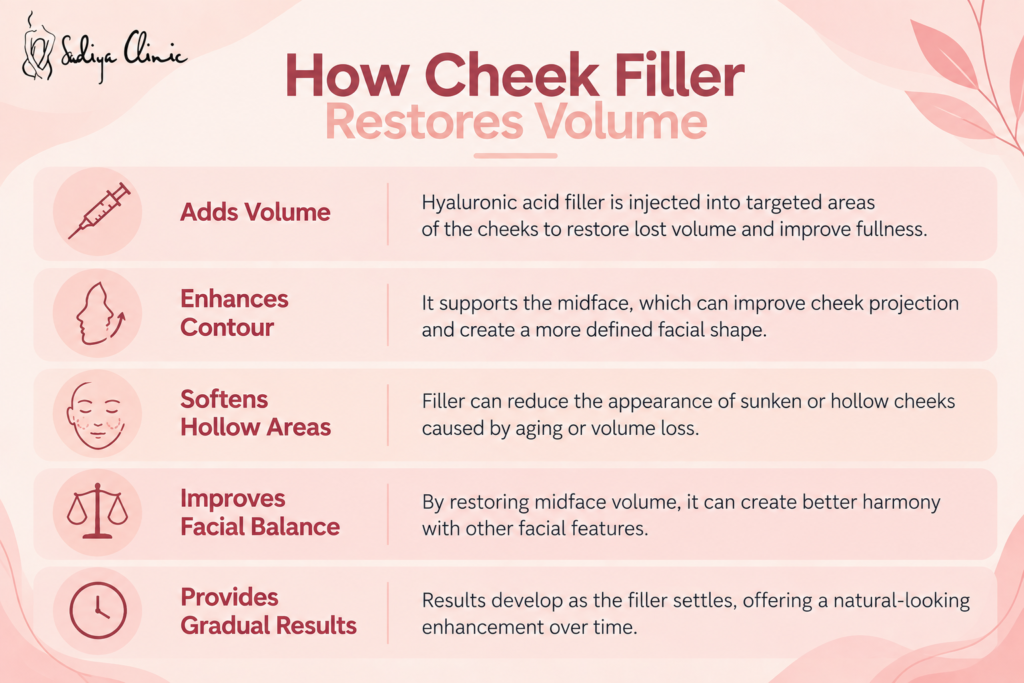
Cheek filler restores facial volume by adding hyaluronic acid to selected areas of the midface. It can enhance cheek projection and improve facial balance. The treatment may also soften hollow areas caused by volume loss. However, results depend on anatomy, product choice, injection technique, and treatment goals. Careful planning supports subtle, natural-looking enhancement.
For personalized cheek augmentation, At Sadiya Clinic, treatments are planned around your facial features and aesthetic goals. The team focuses on balanced, natural-looking results. Schedule a consultation today to explore suitable options for your needs. Concierge services are also available for a comfortable and personalized treatment experience.
How Does Cheek Filler Restore Lost Facial Volume?
Cheek filler restores lost facial volume by adding a gel beneath targeted areas of the skin. It can improve fullness and midface contour. Hyaluronic acid fillers are commonly used for this purpose. Careful placement helps create smoother transitions and balanced proportions. The amount needed depends on facial structure, existing volume, and desired results.
A June 2024 study in the Journal of Cosmetic Dermatology [1], examined hyaluronic acid filler for midface volume deficiency. Researchers assessed changes in cheek fullness and facial contour. The findings showed meaningful improvement after treatment. Many participants maintained visible correction during follow-up. Therefore, the research supports filler as an option for restoring lost midface volume.
What Changes Can Cheek Augmentation Create?
Cheek augmentation can restore lost fullness and improve facial balance. It may add subtle projection to flatter cheeks. The treatment can also soften hollow areas and define the midface. However, results depend on your facial structure, treatment plan, and chosen filler. A skilled provider aims for balanced enhancement rather than excessive volume.
Depending on your needs, possible changes include:
- Restored Fullness: Replaces some volume lost through aging or natural facial structure.
- Improved Definition: Creates clearer cheek contours without changing your overall appearance.
- Softer Hollows: Reduces the appearance of sunken areas around the midface.
- Better Facial Balance: Helps cheeks complement the eyes, nose, lips, and jawline.
- Enhanced Projection: Adds controlled forward fullness to naturally flatter cheekbones.
- Smoother Transitions: Creates a more gradual appearance between nearby facial areas.
Cheek augmentation focuses on proportion rather than simply adding more volume. The desired effect should suit your existing features. Therefore, treatment planning is important before injections begin. Your provider can assess facial symmetry, skin quality, and volume needs. This helps create a result that looks subtle, refreshed, and appropriate for your individual appearance.
What Does Research Say About Cheek Filler Results?
Research suggests that cheek filler can provide measurable improvement in midface fullness. Results can remain visible for months after treatment. However, outcomes vary between individuals. Factors such as filler type, placement, facial anatomy, and treatment amount can influence the final appearance and duration of correction.
A November 2024 study in the Journal of Cosmetic Dermatology [2], examined hyaluronic acid fillers for cheek augmentation. Researchers assessed changes in volume, appearance, and patient satisfaction. The findings showed noticeable improvement following treatment. Additionally, participants reported high satisfaction with their outcomes. Most treatment-related effects were mild, supporting HA fillers as an option for enhancing cheek contours.
Which Factors Affect Your Cheek Filler Results?
Several factors affect cheek filler results, including facial structure, product choice, injection technique, treatment amount, and aftercare. Your natural cheek shape also influences the final appearance. Therefore, treatment should be planned around your features and goals. A qualified provider can assess these details before treatment. This approach helps create balanced and natural-looking enhancement.
Facial Structure
Your bone shape and existing volume affect filler placement. Therefore, your provider considers facial proportions before choosing suitable injection points for balanced results.
Filler Selection
Different products have varying firmness, flexibility, and longevity. Your provider selects an appropriate option based on the desired contour, treatment area, and facial characteristics.
Injection Technique
Accurate placement influences symmetry, contour, and overall appearance. Proper technique also requires knowledge of facial anatomy and appropriate injection depth.
Treatment Amount
Using the right volume helps prevent excessive fullness. Your provider may use a conservative amount first. Further enhancement can be considered later if needed.
Aftercare
Following post-treatment instructions can support recovery. Avoiding pressure, excessive heat, and strenuous activity may help reduce temporary swelling and discomfort.
A 2017 study in the Journal of Drugs in Dermatology [3], examined midface enhancement using hyaluronic acid. Researchers focused on injection technique, product placement, and safety. The findings showed improved facial volume after treatment. Therefore, careful product selection and accurate placement can influence outcomes. These factors may also support balanced enhancement and reduce treatment-related concerns.
Enhance Your Cheeks With Sadiya Clinic
You may notice flatter cheeks, reduced fullness, or facial contours that appear less defined over time. These changes can affect how balanced your features look. You may also want subtle enhancement without creating an overly filled appearance. Choosing the right treatment and volume can feel difficult without personalized professional guidance.
At Sadiya Clinic, your cheek augmentation plan is tailored to your facial structure, goals, and desired level of enhancement. The team focuses on balanced, natural-looking results with careful treatment planning. Contact us today to discuss your options. For more information, email sadiya@sadiyaclinic.com.
FAQs
How much does cheek filler cost?
Cheek filler costs vary depending on the filler type, amount needed, and clinic. Your provider can assess your facial structure and treatment goals. During consultation, you can receive a personalized estimate. The final price depends on your specific needs, desired results, and recommended treatment plan.
How long does cheek filler swelling last?
Cheek filler swelling usually improves within a few days. Mild puffiness may last up to one or two weeks. However, recovery varies between individuals. During this period, avoid touching or pressing the treated area. Follow your provider’s aftercare instructions, especially if swelling becomes severe, painful, or continues worsening.
Can I sleep on my side after cheek filler?
It is better to avoid side sleeping immediately after cheek filler. Pressure may increase swelling or discomfort. Try sleeping on your back with your head slightly elevated for the first night. After that, follow your provider’s advice. Your recommended recovery period may vary based on the treatment and your individual response.
When can I wear makeup after cheek filler?
You can usually wear makeup after cheek filler once the skin has settled. Many providers recommend waiting at least 12 hours. This helps reduce irritation and pressure around injection sites. Meanwhile, keep the area clean and avoid rubbing your cheeks. Follow your provider’s specific aftercare advice for the safest recovery.
Can cheek filler be dissolved if I do not like the results?
Yes, hyaluronic acid cheek filler can usually be dissolved if you dislike the result. A healthcare professional uses hyaluronidase to break down the filler. However, the outcome can vary. Therefore, only a qualified injector should perform this treatment. They will assess your cheeks first and recommend the safest approach for correction.
About the Author
Dr. Aimen Arij, Pharm.D.
Dr. Aimen Arij, Pharm.D., is a licensed Clinical Pharmacist with over 6 years of experience in clinical and pharmaceutical practice. She has served as a Medical Science Liaison Executive for a multinational pharmaceutical company and has extensive experience working with international telepharmacy services. Her professional interests include medication safety, patient education, and translating clinical research into accessible, evidence-based health content.
Medically Reviewed By
Dr. Sadiya Naseem, DNP, FNP-BC
Dr. Sadiya Naseem, DNP, FNP-BC, is a board-certified Family Nurse Practitioner and the founder of Sadiya Clinic in Vienna, VA. She is a national injector trainer known for her ultrasound-guided approach to aesthetic treatments and her focus on safe, natural-looking results.
References
- Ren, R., Xue, H., Gao, Z., Wang, H., Xia, X., Qu, Y., Bromée, T., Almegård, B., & Zhao, H. (2024). Restoring long-lasting midface volume in the Asian face with a hyaluronic acid filler: A randomized controlled multicenter study. Journal of Cosmetic Dermatology, 23(6), 1985–1991.
- Nikolis, A., Bertucci, V., Humphrey, S., Beleznay, K., Bernstein, S., & Prygova, I. (2024). Effectiveness of hyaluronic acid fillers for cheek augmentation using a treatment guide to choose between products. Journal of Cosmetic Dermatology, 23(11), 3525–3531.
- Prager, W., Agsten, K., Kravtsov, M., & Kerscher, M. (2017). Mid-face volumization with hyaluronic acid: Injection technique and safety aspects from a controlled, randomized, double-blind clinical study. Journal of Drugs in Dermatology, 16(4), 351–357.